Tesla Wall Connector Installation Considerations for Sacramento Homes
Planning a Tesla Wall Connector Installation for Your Home
A Tesla Wall Connector can provide convenient Level 2 charging at home, but choosing the equipment is only one part of planning the installation. The home's available electrical capacity, desired charging output, circuit requirements, charger location, cable reach, and vehicle compatibility can all influence how the Wall Connector should be installed.
The Wall Connector does not necessarily need to operate at its maximum charging output. Tesla supports several circuit and output configurations, allowing the equipment to be matched to the electrical capacity available at the home. Power Management features may provide additional options for some installations where electrical capacity is limited.
Sacramento homeowners should consider these electrical and practical requirements before purchasing equipment or beginning installation work. This guide explains the major factors to evaluate when planning a Tesla Wall Connector installation and how those decisions can affect everyday home charging.
Start With the Vehicle's Charging Capability
Before deciding how a Tesla Wall Connector should be configured, homeowners should consider how much AC charging power their vehicle can actually accept. The Wall Connector can provide up to 48 amps and 11.5 kW when installed on an appropriately sized circuit, but that does not mean every vehicle will charge at that maximum rate.
The vehicle's onboard charging system determines how much AC power it can use. If a vehicle can accept less power than the Wall Connector is capable of providing, installing the charger at its maximum output will not make that particular vehicle charge any faster. The vehicle and charging equipment work together, with the actual charging rate limited by the capabilities of the system.
Daily driving needs are another consideration. A homeowner who typically drives a modest number of miles each day and has the vehicle parked at home overnight may be able to replenish that energy comfortably without using the Wall Connector at its highest possible output. Charging needs should therefore be considered alongside maximum specifications.
This becomes particularly relevant when the home's available electrical capacity is limited. Configuring a Wall Connector for a lower charging output may provide more than enough overnight charging for the household while reducing the electrical capacity required for the new charging circuit. Tesla supports multiple Wall Connector output configurations rather than requiring every installation to operate at the maximum 48 amps.
Starting with the vehicle and the household's actual charging needs provides a better basis for planning the installation than simply choosing the highest available charging output. Once those needs are understood, the home's electrical system can be evaluated to determine what charging capacity it can reasonably support.
Evaluate the Home's Available Electrical Capacity
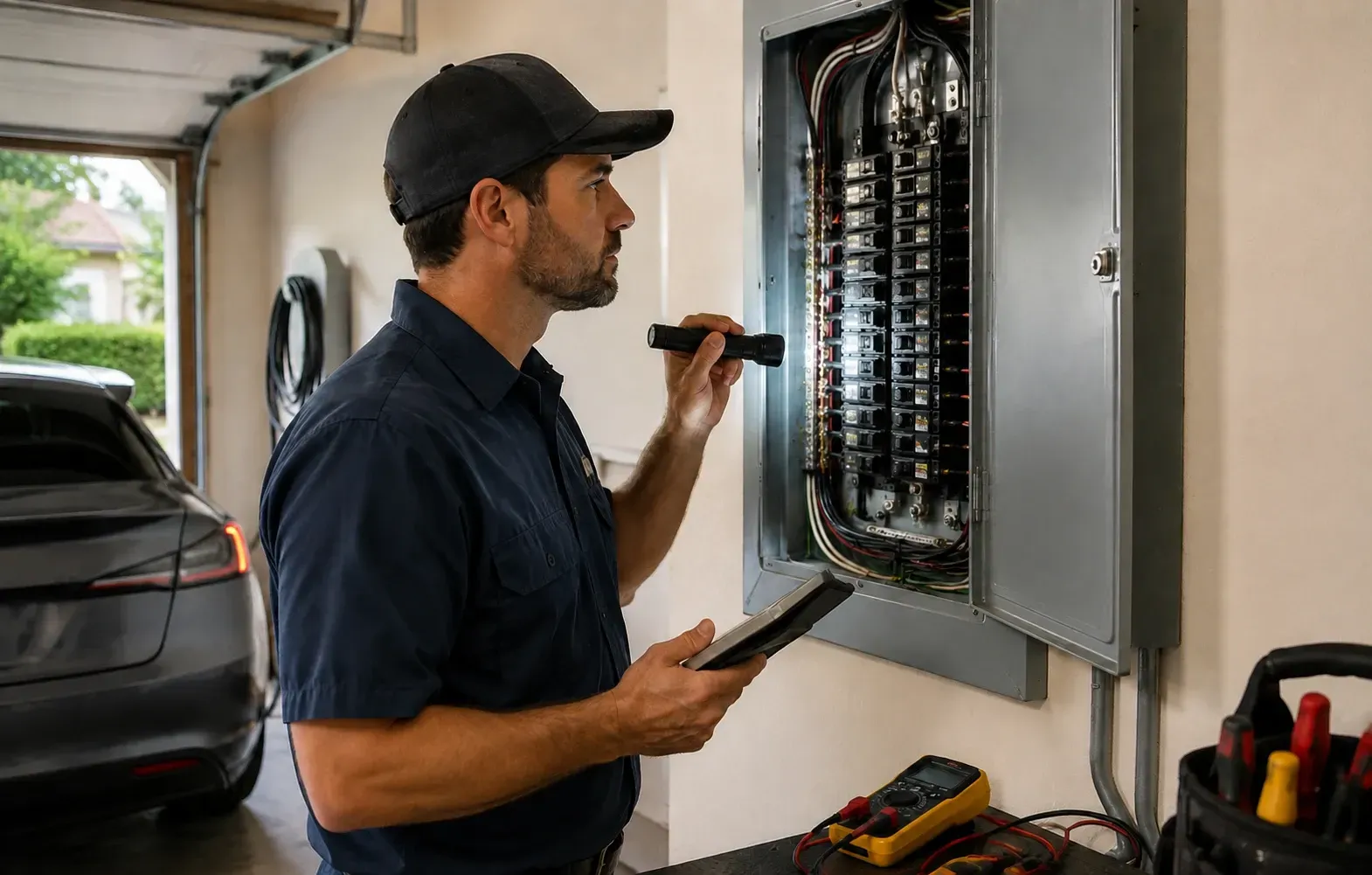
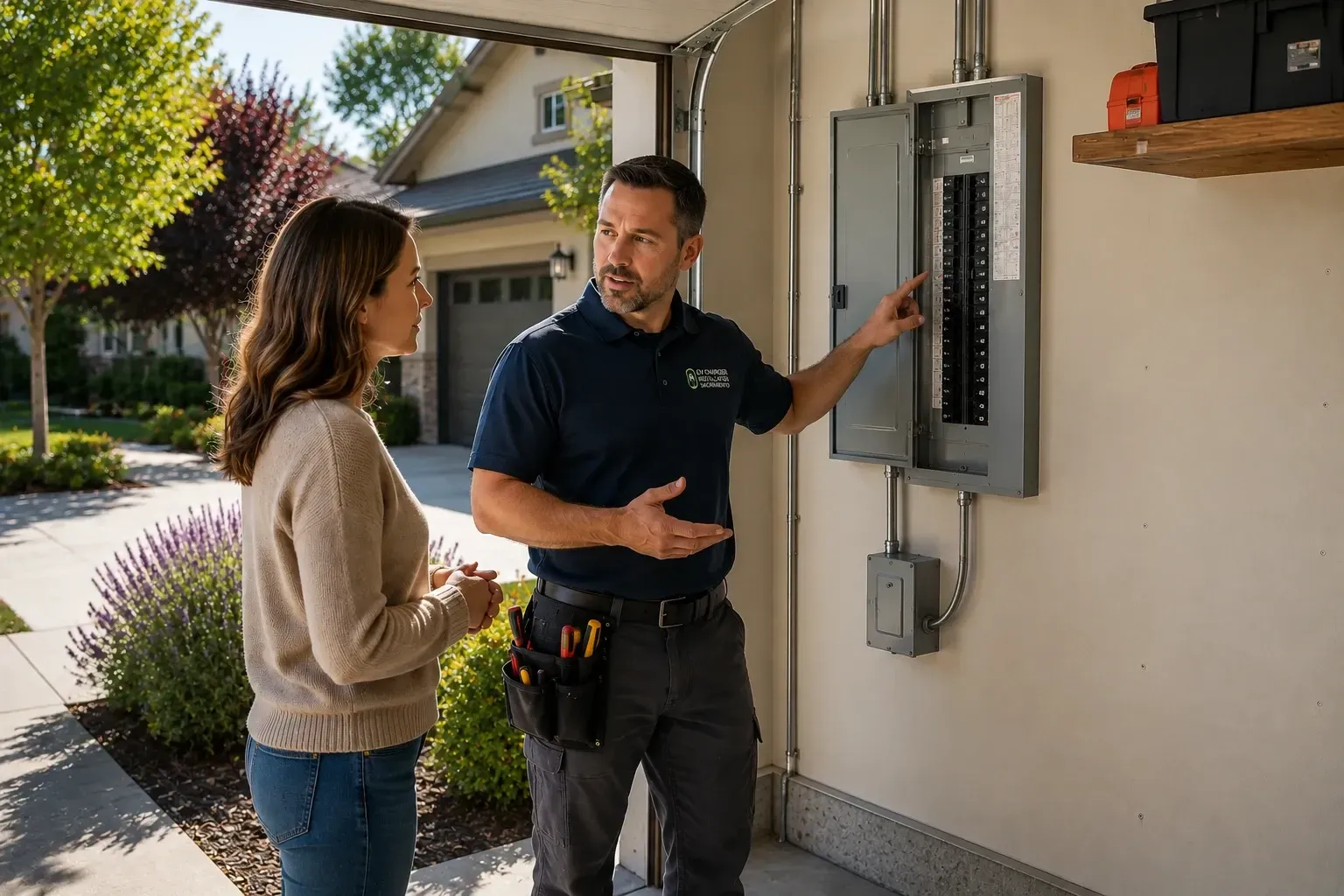
A Tesla Wall Connector adds a significant new electrical load to the home, so available electrical capacity should be evaluated before deciding how the charger will be configured. The size of the electrical panel alone does not determine whether the home can support the desired charging output.
The evaluation needs to consider the electrical demands already placed on the home. Heating and cooling equipment, electric water heating, cooking appliances, clothes dryers, and other significant loads all contribute to how much of the home's electrical capacity may already be in use. Two homes with panels of the same rating can therefore have very different amounts of capacity available for EV charging.
Available breaker space is another consideration, but an open position in the electrical panel should not be confused with available electrical capacity. There may be physical room for the required circuit breaker even when the home's existing electrical loads need to be evaluated before another substantial load is added.
The Wall Connector's configurable charging output provides useful flexibility when planning around the home's electrical system. A home that cannot reasonably support charging at the Wall Connector's maximum 48-amp output may still be able to support a lower charging rate that comfortably meets the homeowner's daily driving and overnight charging needs.
Evaluating available capacity before selecting the circuit and charging output helps the installation reflect both the home's electrical limitations and the vehicle's actual charging requirements. The objective is not automatically to provide the highest possible charging rate, but to determine an appropriate charging configuration for the particular home and household.
Choose an Appropriate Circuit and Charging Output
Once the vehicle's charging needs and the home's available electrical capacity are understood, the Wall Connector can be matched to an appropriate circuit and charging output. Tesla does not require every Wall Connector installation to operate at its maximum power level, which gives homeowners flexibility when planning the electrical circuit.
At its maximum configuration, the Wall Connector can provide 48 amps of charging output on a 60-amp circuit. Tesla also supports lower configurations, including 40 amps on a 50-amp circuit, 32 amps on a 40-amp circuit, 24 amps on a 30-amp circuit, 16 amps on a 20-amp circuit, and 12 amps on a 15-amp circuit.
The difference between circuit rating and charging output reflects an important electrical requirement. EV charging is treated as a continuous electrical load, so the charging equipment is configured below the circuit breaker's full rating. For example, a Wall Connector operating at 32 amps can be supplied by a 40-amp circuit rather than continuously drawing the full 40 amps available at the breaker.
Choosing a lower output does not necessarily mean compromising useful home charging. A 32-amp or 24-amp configuration, for example, may provide ample overnight charging for a household's normal driving while requiring less electrical capacity than a 48-amp installation. The appropriate choice depends on the vehicle, daily charging needs, available electrical capacity, and the overall installation.
The circuit and Wall Connector output should therefore be planned together rather than assuming the largest available circuit is automatically preferable. Matching charging output to the home's electrical system and the homeowner's actual needs can provide practical Level 2 charging without installing more charging capacity than the household is likely to use.
Understand That Wall Connector Is Hardwired
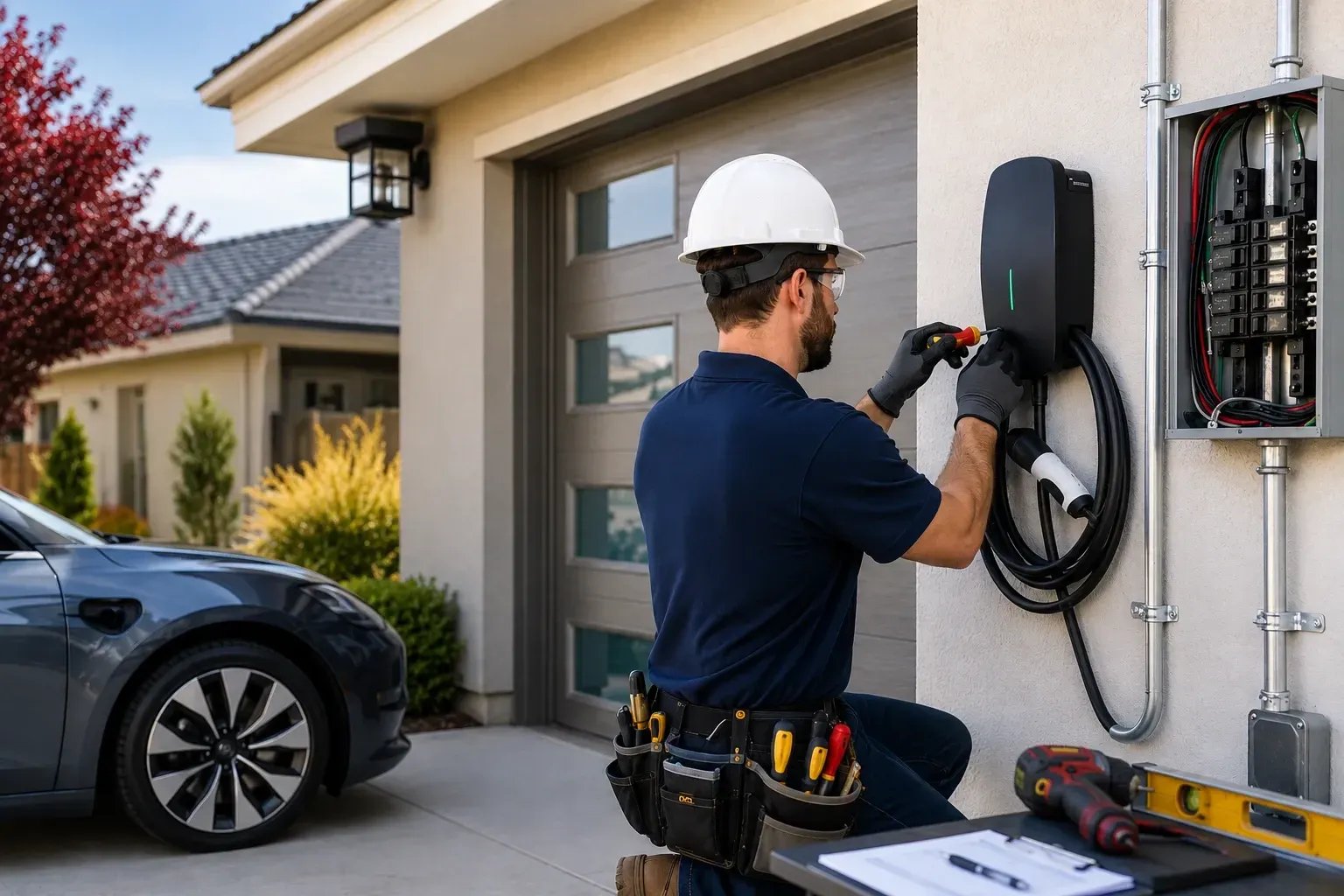
Tesla's Wall Connector is designed for a hardwired electrical installation. Instead of plugging the charging equipment into a 240-volt receptacle, the dedicated branch circuit is connected directly to the Wall Connector as part of the permanent electrical installation. Tesla's current installation instructions specify hardwiring rather than a cord-and-plug connection.
This distinction is important when homeowners are planning the electrical work. Installing a Wall Connector is different from installing a 240-volt receptacle for a portable or plug-in EV charger. The circuit, wiring, breaker, equipment location, and Wall Connector configuration should be planned as parts of the same installation.
A hardwired installation also eliminates the receptacle and plug connection between the branch circuit and charging equipment. The Wall Connector remains installed at its designated location, so choosing that location carefully becomes particularly important for convenient cable reach and everyday charging.
Homeowners who already have a 240-volt receptacle in the garage should not assume that the Wall Connector can simply be plugged into it or that the existing circuit is automatically suitable. The existing circuit would need to be evaluated for the planned installation, including its circuit rating, wiring, location, and the charging output that the electrical system can support.
Understanding the hardwired requirement early helps homeowners plan the project correctly from the beginning. Rather than deciding between plugging in or hardwiring this particular charging equipment, the planning decisions become where to locate the Wall Connector, what circuit and charging output are appropriate, and how the electrical circuit will reach the equipment.
Choose a Practical Wall Connector Location
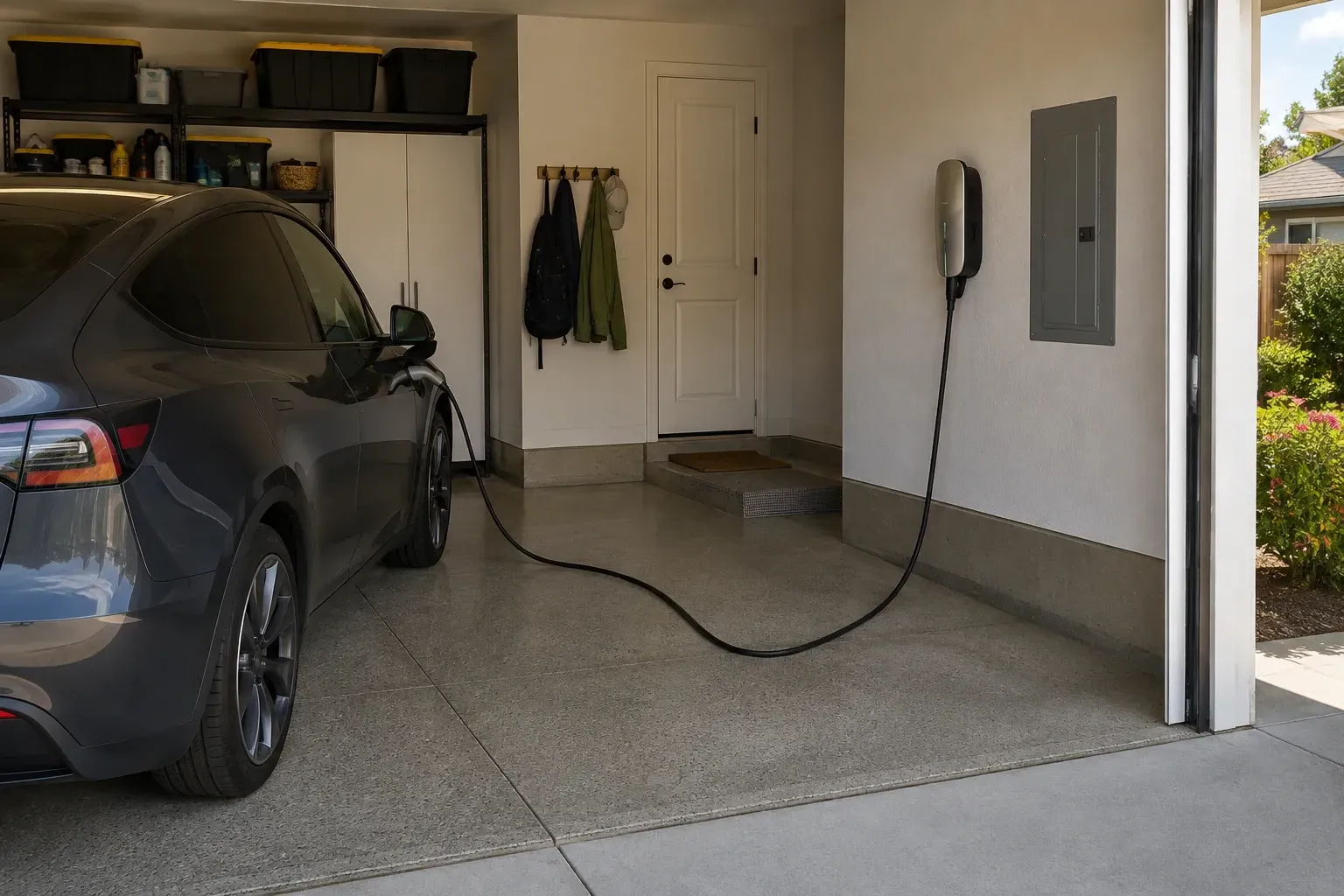
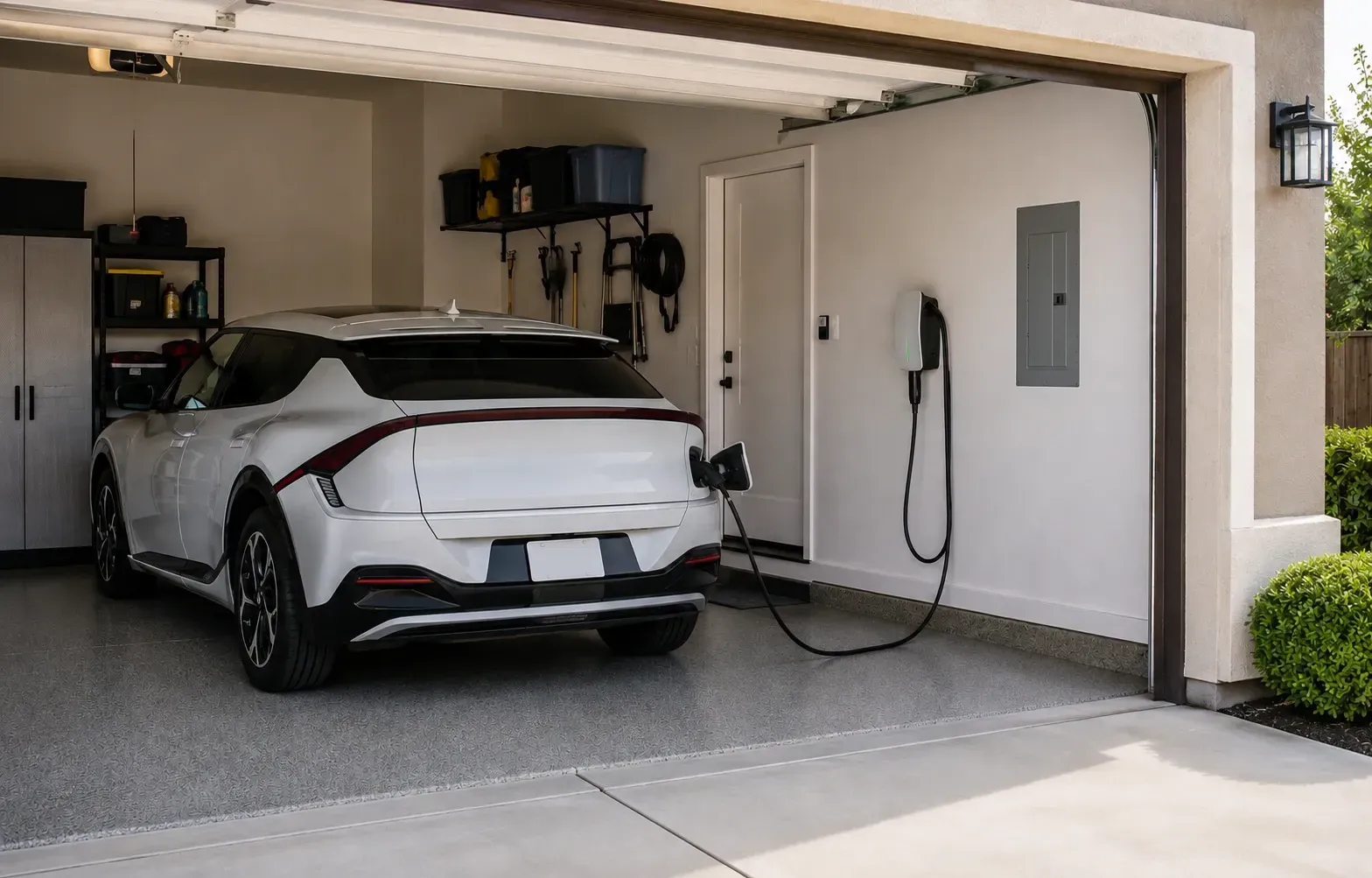
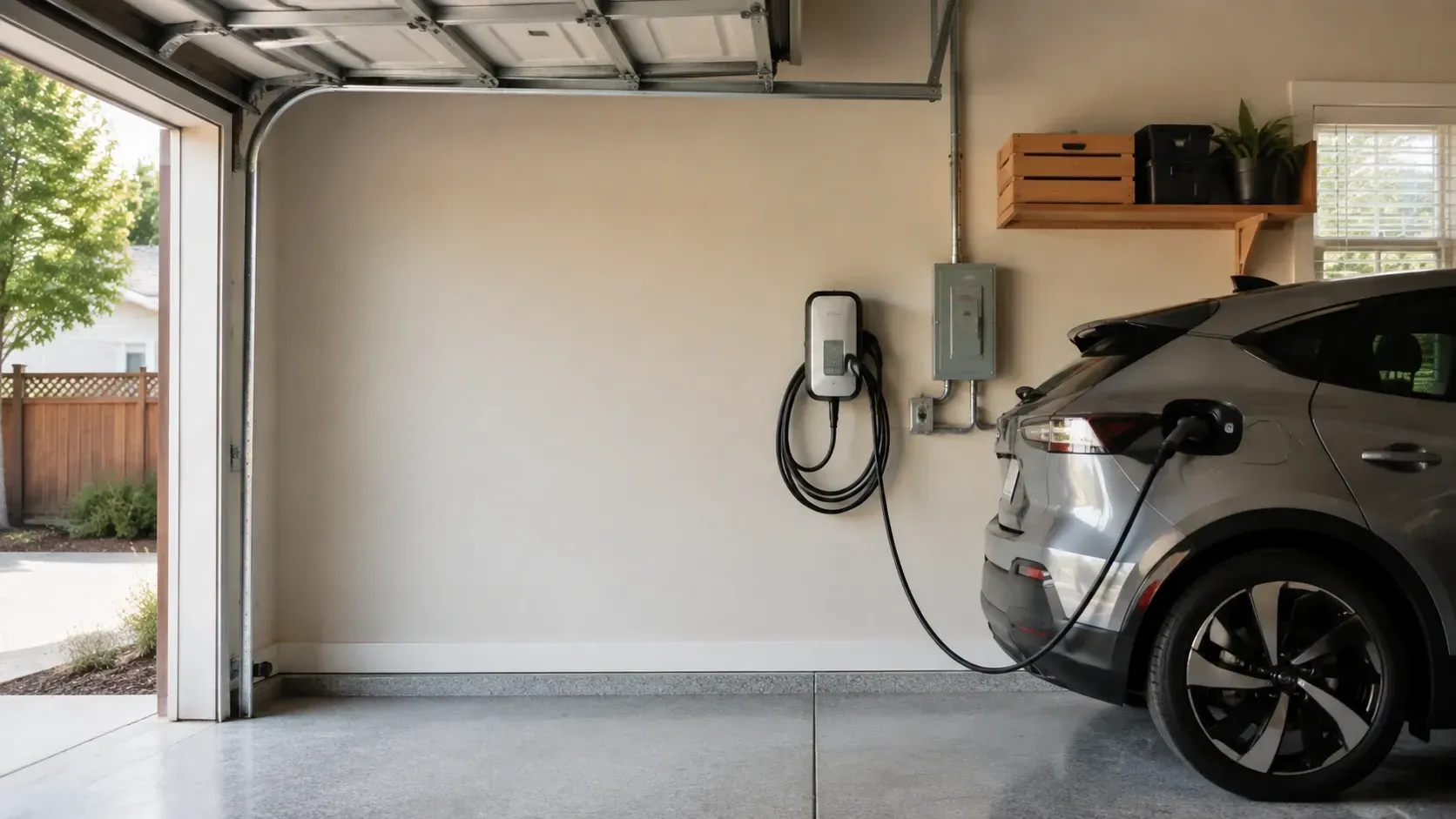
Choosing where to mount the Wall Connector affects both the electrical installation and how convenient the charger will be to use every day. The location should work with where the vehicle normally parks, the position of its charging port, the Wall Connector's cable reach, and the available wall space in the garage or charging area.
The electrical-panel location and circuit route should also be considered, but the shortest electrical route does not automatically provide the best charger location. A slightly longer circuit route may sometimes allow the Wall Connector to be positioned where connecting the vehicle is considerably easier and the charging cable can be kept away from frequently used walking or driving paths.
Homeowners who normally park their EV in the driveway should plan the Wall Connector location around that arrangement rather than assuming the vehicle will eventually be parked inside the garage. The cable needs to comfortably reach the vehicle's normal charging position while following a practical route that avoids being pinched, driven over, or routinely placed across heavily used areas.
Because a hardwired Wall Connector is intended to remain in its installed location, it is worth comparing several possible positions before the electrical work begins. A good location balances circuit routing with cable reach, vehicle position, accessibility, and reasonable flexibility for a future vehicle.
Learn More About Choosing the Best Location for a Home EV Charger
Power Management May Help With Limited Electrical Capacity
A home that cannot support the Wall Connector at its maximum charging output may still have practical options for Level 2 charging. Tesla's current Wall Connector includes Power Management features designed to match charging demand to the electrical capacity available at the home.
Static Power Management establishes a fixed maximum charging output during installation. For example, rather than configuring the Wall Connector for 48-amp charging, it can be set to a lower output appropriate for the home's available electrical capacity. That maximum remains fixed rather than changing as other electrical loads in the home turn on and off.
Dynamic Power Management takes a different approach. Using a Tesla-approved power meter installed separately from the Wall Connector, the system monitors available power at the electrical panel and adjusts the vehicle's charging rate in real time based on household electrical use.
For example, if major electrical loads such as a clothes dryer and electric water heater are operating, Dynamic Power Management can reduce the Wall Connector's charging rate. When household electrical demand decreases, the charging rate can increase again while remaining within the configured electrical limits. Tesla specifically identifies this feature as useful for homes or parking locations with limited available power.
Homes with other Tesla energy products, such as Powerwall, may also integrate Wall Connector into a broader Tesla home-energy system. Tesla currently supports pairing compatible Wall Connector and Powerwall equipment so they can be monitored together and additional charging features can be available through the Tesla app. The presence of a Powerwall does not eliminate the need to properly evaluate the home's electrical system and Wall Connector installation.
Power Management should therefore be considered as part of the overall electrical planning rather than as an assumption that an electrical upgrade will never be necessary. The home's available capacity, desired charging output, existing electrical loads, equipment requirements, and appropriate Power Management configuration all need to be considered when determining the installation approach.
Learn More About Tesla Wall Connector Power Management
Consider Vehicle and Connector Compatibility
Vehicle compatibility should be considered before selecting a Tesla Wall Connector. The connector on the charging equipment needs to match the vehicle's charging inlet, and homeowners should think about both the EV they own today and other vehicles that may reasonably need to use the charger in the future.
Tesla's current Wall Connector uses the NACS connector, the charging connection used by current Tesla vehicles and increasingly supported by other EV manufacturers. A non-Tesla vehicle equipped with a compatible NACS charging inlet may therefore be able to use the Wall Connector for home AC charging, subject to the vehicle's charging capabilities and requirements.
Tesla also offers the Universal Wall Connector, which is designed to provide broader vehicle compatibility. It incorporates an integrated J1772 adapter, allowing it to charge vehicles with either a NACS or J1772 AC charging inlet without requiring the homeowner to rely on a separate everyday adapter.
For a household that expects to charge only a compatible Tesla or NACS-equipped vehicle, the standard Wall Connector may provide everything needed. A household with different EVs—or one that wants greater flexibility for future vehicles—may want to consider whether the Universal Wall Connector better fits those charging needs.
Connector compatibility is therefore worth deciding before the equipment is purchased and installed. The electrical requirements may be similar, but selecting the appropriate Wall Connector version can determine how conveniently the charging equipment works with the vehicles that will actually use it.
Compare Tesla Wall Connector Options
Complete Commissioning, Wi-Fi and App Setup
After the Wall Connector has been installed and electrically connected, it needs to be properly commissioned before regular charging begins. Commissioning establishes important operating settings so the charging equipment matches the electrical circuit and installation.
Tesla currently uses the Tesla One app for Wall Connector commissioning. During this process, the installer configures information such as the circuit breaker rating and maximum charging output. This is important because a Wall Connector installed on a lower-rated circuit must be configured so its charging output corresponds to that circuit rather than simply operating at the equipment's maximum capability.
Connecting the Wall Connector to Wi-Fi allows the equipment to receive firmware updates and supports connected features and diagnostics. Reliable Wi-Fi coverage at the charger location is therefore worth considering when planning the installation, particularly in garages where the home's wireless signal may be weaker.
The homeowner can also register the Wall Connector in the Tesla app. Once added, available features can include monitoring charging activity, viewing charging history, scheduling charging, adjusting certain settings, and accessing information about the charging equipment. Available functions can depend on the Wall Connector and system configuration.
Commissioning and connected setup should be treated as part of completing the Wall Connector installation rather than as optional details to address later. Verifying the electrical configuration, establishing connectivity, and confirming that the vehicle charges properly helps ensure the equipment is ready for everyday use.
Learn More About Tesla Wall Connector Installation and Setup
Check SMUD Incentive Eligibility Before Purchasing a Wall Connector
Sacramento homeowners served by SMUD should check current incentive requirements before purchasing a Tesla Wall Connector if a Charge@Home rebate is part of their planning. Equipment that is electrically appropriate for a home does not automatically qualify for a utility incentive.
SMUD's current Charge@Home specifications limit eligible Level 2 charging equipment to a maximum 32-amp output on a maximum 40-amp circuit breaker. Adjustable-output chargers can qualify when they meet SMUD's other program specifications and their maximum eligible configuration can be safely served by a 40-amp circuit.
However, SMUD's current Qualified Product List specifically states that Tesla-brand Wall Connectors do not currently meet SMUD's Charge@Home specifications. This means configuring a Tesla Wall Connector for 32-amp charging on a 40-amp circuit does not, by itself, make the Wall Connector eligible for the current charger incentive. SMUD does currently list Tesla's 32-amp Mobile Connector as a qualifying product, illustrating why eligibility should be checked by specific equipment rather than brand alone.
Homeowners deciding between a Tesla Wall Connector and equipment that qualifies for a SMUD incentive should therefore consider their priorities before making the purchase. SMUD's equipment requirements and qualified-product list can change, so homeowners interested in Charge@Home should verify the current information directly with SMUD when they are ready to proceed.
View SMUD's Current Qualified EV Charger List
Learn More About SMUD EV Charging Programs and Incentives
Plan Separately for Multiple Wall Connectors
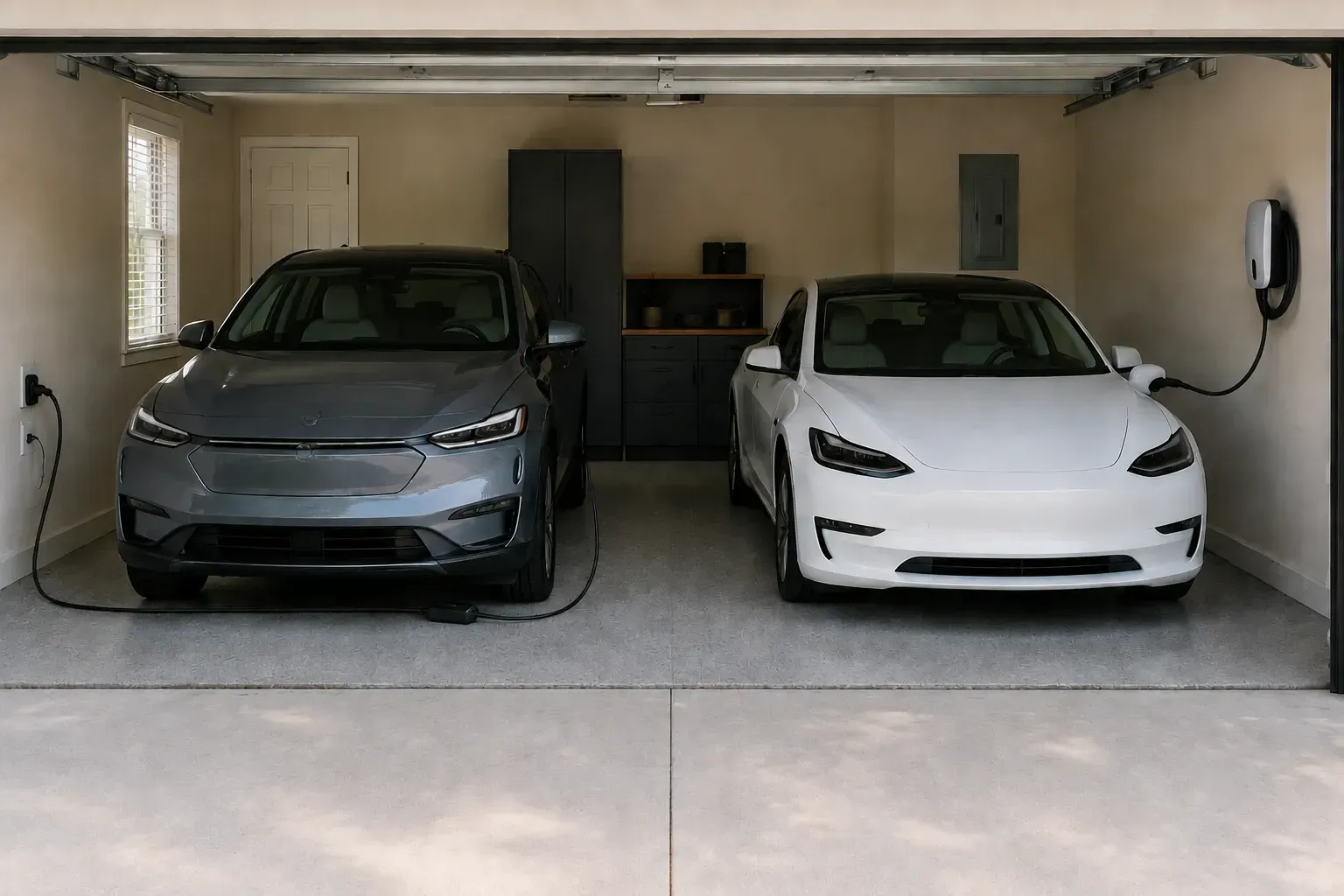
A household expecting to charge more than one EV should consider that need before simply installing a second Wall Connector. Two charging vehicles can create substantially different electrical demands than a single charger, so the home's available capacity, parking arrangement, charging needs, and electrical design should be evaluated as a system.
Tesla's Group Power Management allows multiple compatible Gen 3 Wall Connectors to share available electrical capacity. Tesla currently supports groups of up to six Wall Connectors, with the available power distributed among vehicles that are charging rather than requiring every Wall Connector to operate simultaneously at its individual maximum output.
This can provide useful flexibility for households with multiple EVs, but installing additional Wall Connectors involves more than deciding where to mount another charger. Circuit requirements, available electrical capacity, charging schedules, vehicle use, parking locations, and the appropriate Power Management configuration should all be considered when planning the system.
Homeowners who expect to add another EV in the future can mention that possibility when planning the first Wall Connector installation. Some advance planning may make future expansion easier, but the appropriate approach depends on the home's electrical system and how multiple vehicles will actually be charged.
Address Permits and Inspection Requirements
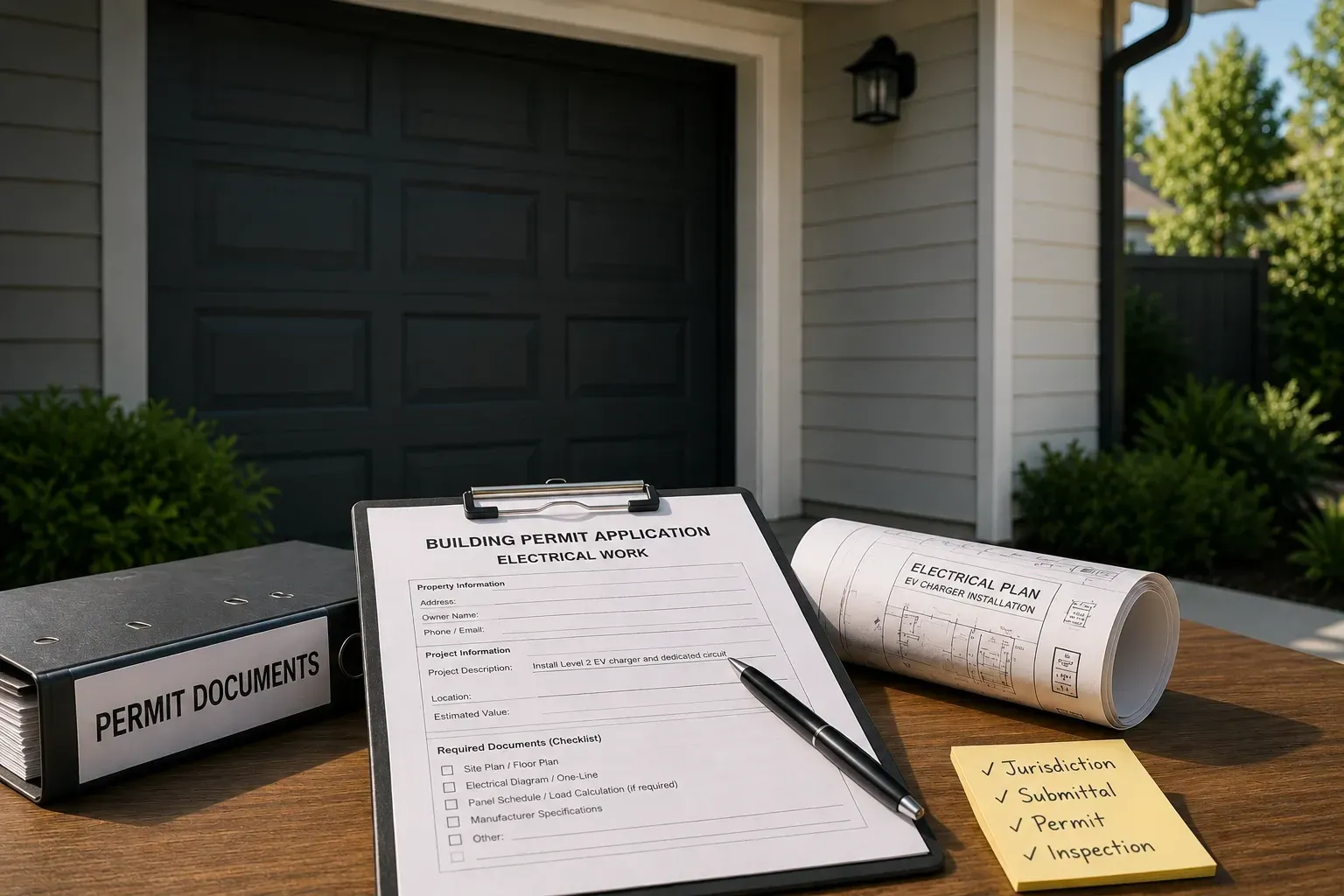
Installing a Tesla Wall Connector involves permanent electrical work, so applicable permit and inspection requirements should be considered before the installation begins. The requirements depend on the jurisdiction that has authority over the property and the scope of the electrical work being performed.
The permit process may require information about the planned charging circuit, electrical panel, Wall Connector, and other aspects of the installation. If additional electrical work is needed to support the charger, that work can also affect the permit application and inspection requirements.
After installation, an electrical inspection may be required to verify that the permitted work was completed in accordance with the approved project and applicable electrical requirements. Homeowners should account for this step when planning the project rather than treating the physical installation of the Wall Connector as the final step.
Permit procedures can differ between the City of Sacramento, unincorporated Sacramento County, and surrounding communities, so homeowners should verify current requirements with the authority having jurisdiction over their property before work begins. Understanding those requirements in advance can help the Wall Connector installation move from electrical planning through installation and inspection more smoothly.
Learn More About EV Charger Permits in Sacramento
Conclusion
A Tesla Wall Connector can provide convenient Level 2 charging at home, but the installation should be planned around more than the charger's maximum output. The vehicle's charging capability, household driving needs, available electrical capacity, circuit size, charger location, and equipment configuration all help determine the appropriate installation approach.
The Wall Connector's configurable charging output and Power Management capabilities can provide useful flexibility for homes with different electrical requirements. Choosing the appropriate configuration, completing commissioning, establishing connectivity, and considering future vehicle or charging needs can help homeowners get the benefits of the equipment without automatically designing every installation around its maximum capability.
Sacramento homeowners considering a Tesla Wall Connector should evaluate the electrical system and installation requirements before work begins, including applicable permitting and inspection requirements. Planning these factors together can result in a charging setup that works well with the vehicle, the home, and the household's everyday charging needs.
Does a Tesla Wall Connector require a 60-amp circuit?
No. A 60-amp circuit supports the Wall Connector's maximum 48-amp charging output, but Tesla supports several lower circuit and charging-output configurations. The appropriate configuration depends on the vehicle's charging needs and the home's available electrical capacity.
Can a Tesla Wall Connector be plugged into a 240-volt outlet?
No. Tesla's Wall Connector is designed for a hardwired installation, with the branch circuit connected directly to the charging equipment. Homeowners with an existing 240-volt receptacle should have the circuit evaluated rather than assuming the Wall Connector can simply be plugged into it.
Can a Tesla Wall Connector operate at a lower charging rate?
Yes. The Wall Connector can be configured for lower charging output when maximum power is unnecessary or the home's available electrical capacity is limited. The charging output should be matched to the circuit, vehicle, and household charging needs.
Can Tesla Power Management help if electrical capacity is limited?
Potentially. Tesla offers Power Management options that can limit charging to a fixed output or, with appropriate additional equipment, dynamically adjust charging based on household electrical demand. The home's electrical system still needs to be evaluated to determine the appropriate installation approach.
Can a Tesla Wall Connector charge a non-Tesla EV?
It can charge compatible non-Tesla EVs when the charger's connector matches the vehicle's charging inlet. Tesla also offers the Universal Wall Connector, which provides compatibility with both NACS and J1772-equipped vehicles through its integrated adapter.
Can a home have more than one Tesla Wall Connector?
Yes. Tesla's Group Power Management can coordinate multiple compatible Gen 3 Wall Connectors and distribute available charging power among connected vehicles. Planning multiple chargers should include the home's electrical capacity, parking arrangements, charging needs, and Power Management configuration.
Contact Us
Contact Us - Resources Level 2 Guide
Considering a Tesla Wall Connector for your Sacramento home?
Your vehicle, electrical capacity, desired charging output, charger location, and available power-management options can all influence the installation. Call to discuss your project and the Wall Connector installation considerations that may apply to your home.