SMUD EV Charging Programs and Incentives (verified current information)
Understanding SMUD Programs for Home EV Charging
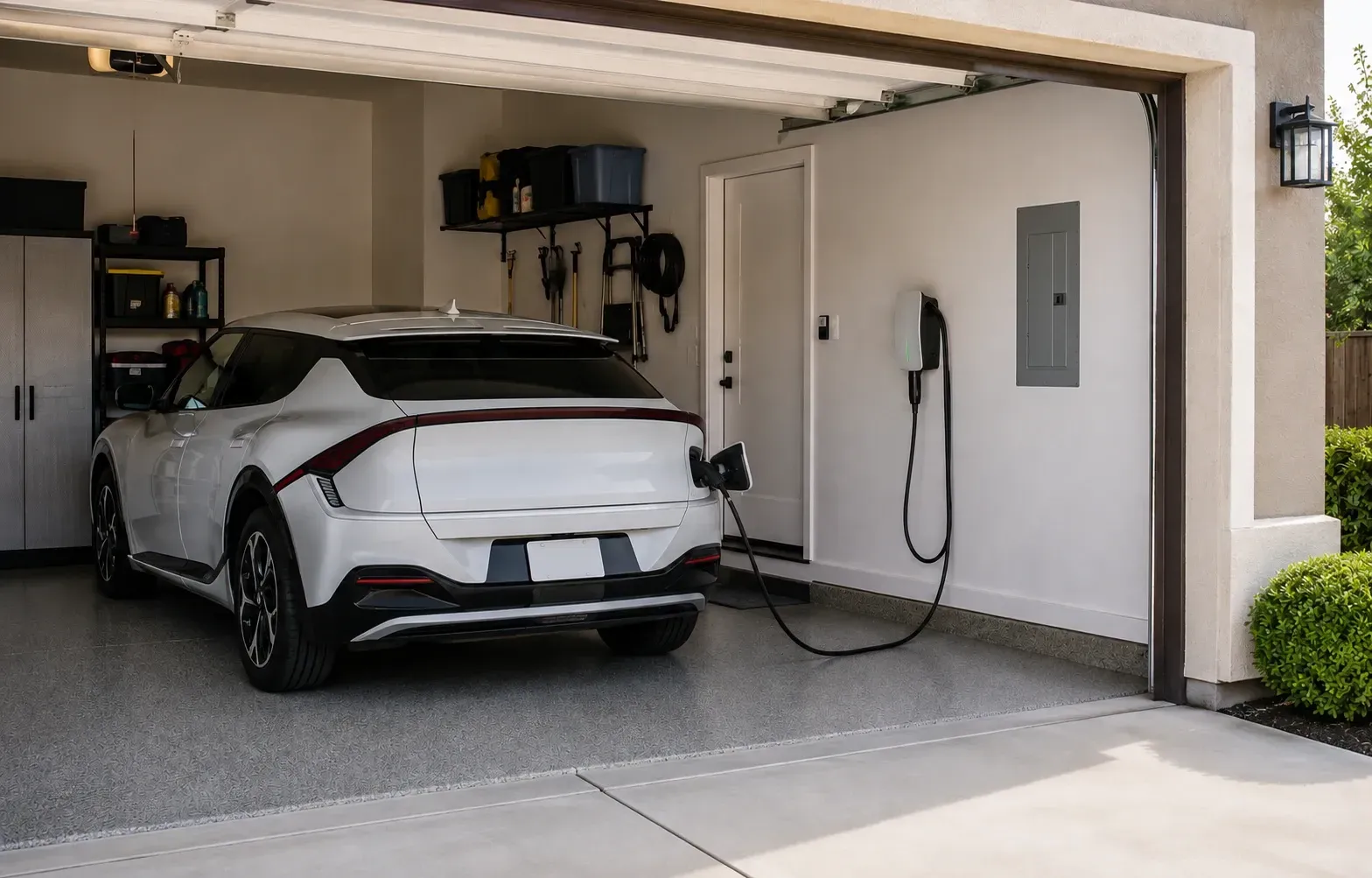
Sacramento homeowners considering an electric vehicle or a home EV charger may have access to programs offered by the Sacramento Municipal Utility District (SMUD). These programs can include incentives for eligible charging equipment and electrical installation, electricity-rate benefits for EV owners, and other programs designed to support home charging.
The programs do not all work the same way. Some can help with eligible costs associated with installing home charging equipment, while others can affect the ongoing cost or timing of charging an EV. Eligibility, equipment requirements, application procedures, and available funding can also vary by program.
Because utility programs and incentives can change, homeowners should review SMUD's current requirements before purchasing equipment or beginning an installation. This guide explains the major residential EV charging programs currently offered by SMUD, what each is intended to provide, and some of the requirements homeowners should understand when planning home charging.
Start by Confirming That SMUD Is Your Electric Utility
Before considering a SMUD EV charging program or incentive, homeowners should first confirm that SMUD provides electric service to their property. SMUD serves much of Sacramento County and portions of neighboring Placer County, but living in the greater Sacramento area does not automatically mean that a home receives electricity from SMUD.
This distinction matters because SMUD's residential EV programs are designed for customers who meet the eligibility requirements of the individual program. A homeowner served by another electric utility should instead check with that utility for EV charging rates, rebates, or other programs that may be available.
Homeowners who are unsure which electric utility serves their property can check a recent electricity bill or account information. Once SMUD service is confirmed, they can review the current EV programs and determine which, if any, apply to their household, vehicle, charging equipment, and planned installation.
Confirming the utility before purchasing equipment or making installation decisions helps keep the planning process focused on programs the homeowner may actually be eligible to use. From there, the next step is understanding SMUD's current Charge@Home program and the types of home charging expenses it may help address.
Understand the SMUD Charge@Home Program
SMUD's Charge@Home program is designed to help eligible residential customers with some of the costs associated with setting up home EV charging. SMUD currently advertises rebates of up to $600 toward eligible EV charging equipment and/or installation of an electric circuit at the home.
The program includes several types of incentives. Under the current terms, eligible customers may receive up to $100 toward a qualifying EV charger and up to $200 toward a qualifying circuit-sharing or energy-management device. An eligible EV charging circuit installation completed through the SMUD Contractor Network may qualify for an installation incentive of up to $500.
These amounts should not be interpreted as an automatic payment or as separate incentives that can simply be added together without regard to the program rules. SMUD describes the overall Charge@Home offering as providing rebates of up to $600, and reimbursement cannot exceed the customer's actual eligible costs. Applications are also processed on a first-come, first-served basis and incentives are subject to available program funding.
Eligibility requirements also apply to the customer and vehicle. Under the current program terms, the plug-in electric vehicle must be registered with the DMV at the same address as the SMUD residential account, and the name on the vehicle registration must match the name on the SMUD account. SMUD also limits the program to one combined rebate per account and service address over the lifetime of the program.
Because Charge@Home includes separate requirements for the customer, vehicle, charging equipment, and electrical installation, homeowners should review the current program terms before making purchasing or installation decisions. Confirming eligibility in advance can help avoid choosing equipment or an installation approach that does not qualify for the incentive.
Learn More About SMUD Charge@Home
Apply for the SMUD Charge@Home Program
Eligible Charging Equipment Matters
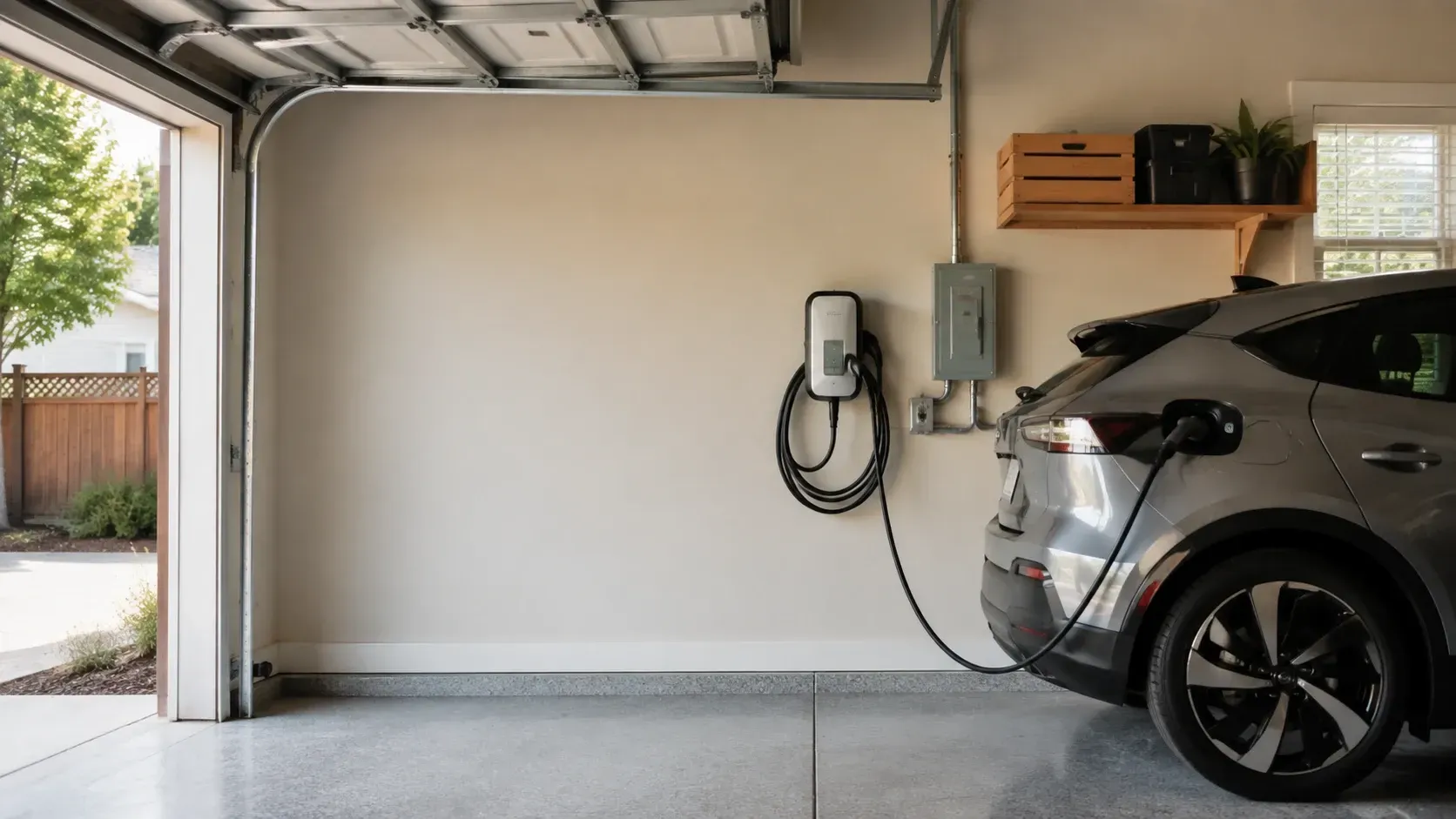
Receiving a Charge@Home incentive for an EV charger depends on selecting equipment that meets SMUD's current program requirements. A Level 2 charger may be appropriate for a home's electrical system and vehicle but still not qualify for the SMUD rebate if it does not meet the program's equipment specifications.
SMUD maintains requirements for eligible charging equipment and identifies qualifying products for the Charge@Home program. Homeowners considering the charger rebate should review the current requirements before purchasing equipment rather than assuming that any Level 2 charger will be eligible.
Charging power is also part of the current program requirements. SMUD's Charge@Home specifications are designed around charging equipment that can be served by a maximum 40-amp circuit breaker. Chargers capable of higher output may still qualify when they meet SMUD's requirements and can be appropriately configured for the eligible charging setup.
This distinction is important because the maximum power advertised for a charger does not necessarily determine how it will be used in a particular home. The charging equipment needs to work with the home's electrical system and installed circuit while also meeting any equipment and configuration requirements associated with the incentive program.
Checking equipment eligibility before purchasing the charger can prevent an unpleasant surprise after the installation is underway. Homeowners interested in the Charge@Home rebate should confirm that the specific charger and planned configuration meet SMUD's current requirements before making the purchase.
Electrical Installation May Also Qualify for an Incentive
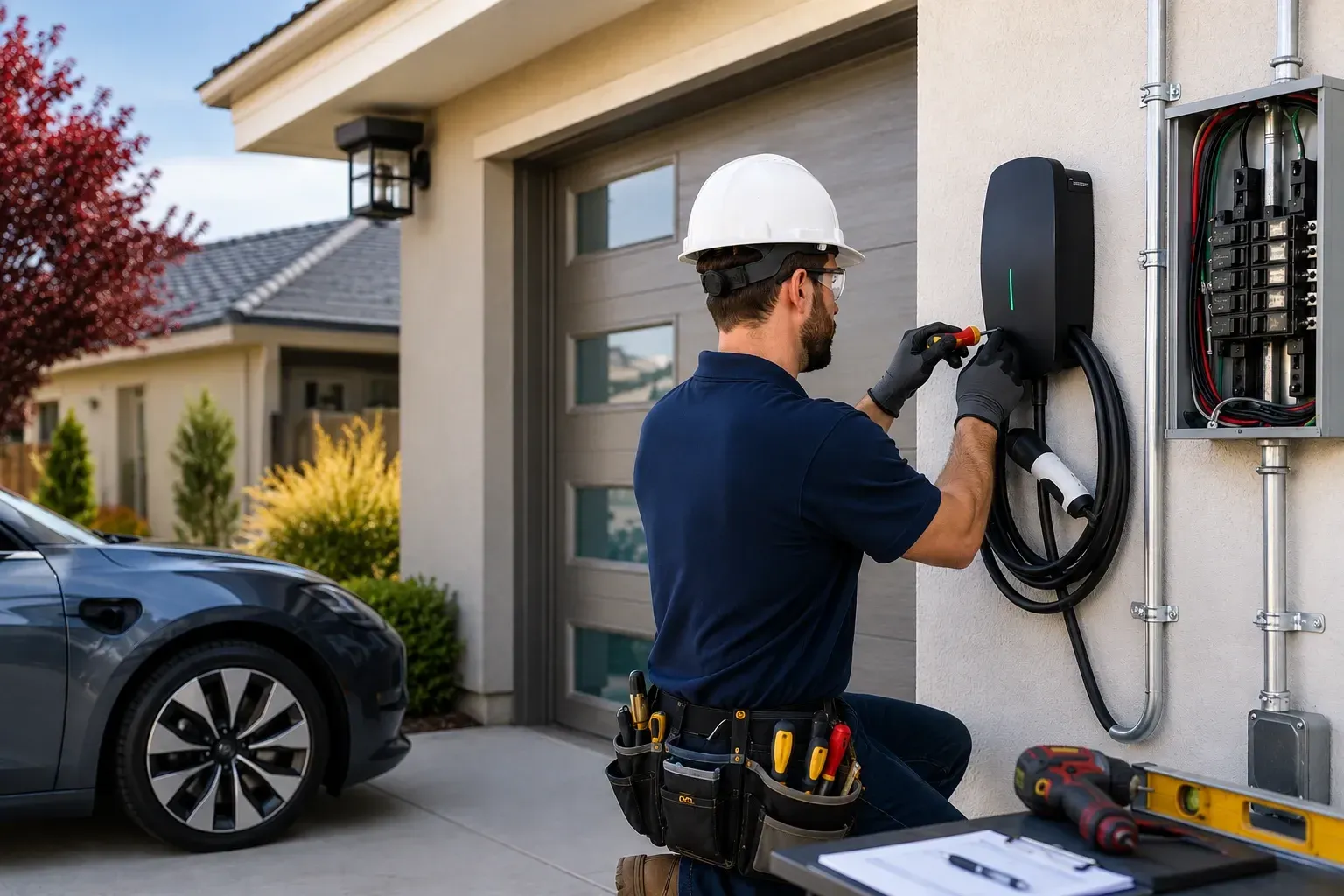
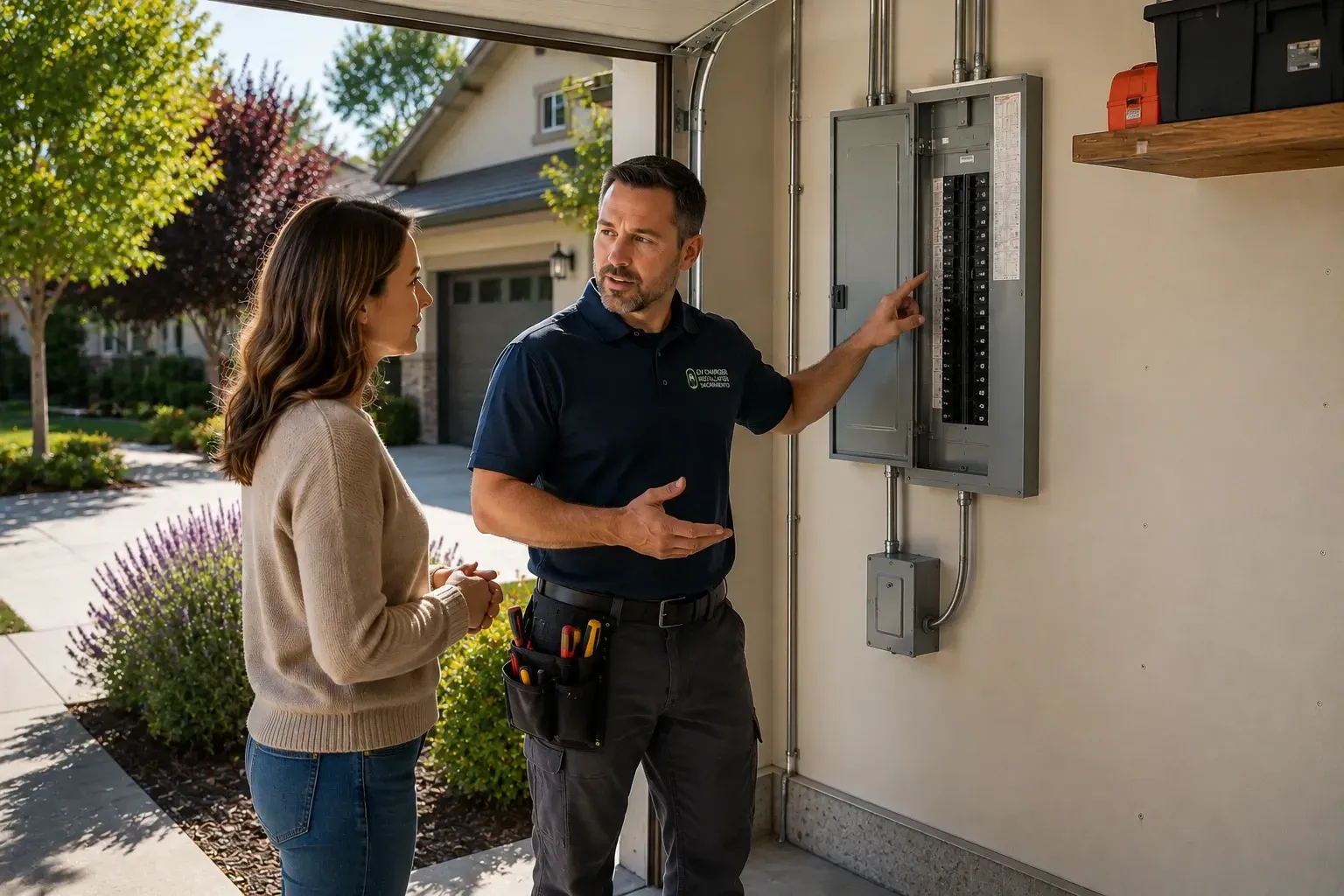
The charging equipment is only one part of a home EV charger project. Installing a Level 2 charger may also require a new dedicated electrical circuit, wiring, conduit, a circuit breaker, and other electrical work needed to provide power at the planned charging location.
SMUD's current Charge@Home program may provide an incentive of up to $500 toward eligible EV charging circuit installation. Under the current program requirements, this installation incentive applies when the work is completed through the SMUD Contractor Network, so homeowners interested in the rebate should understand that requirement before selecting an installer or beginning the electrical work.
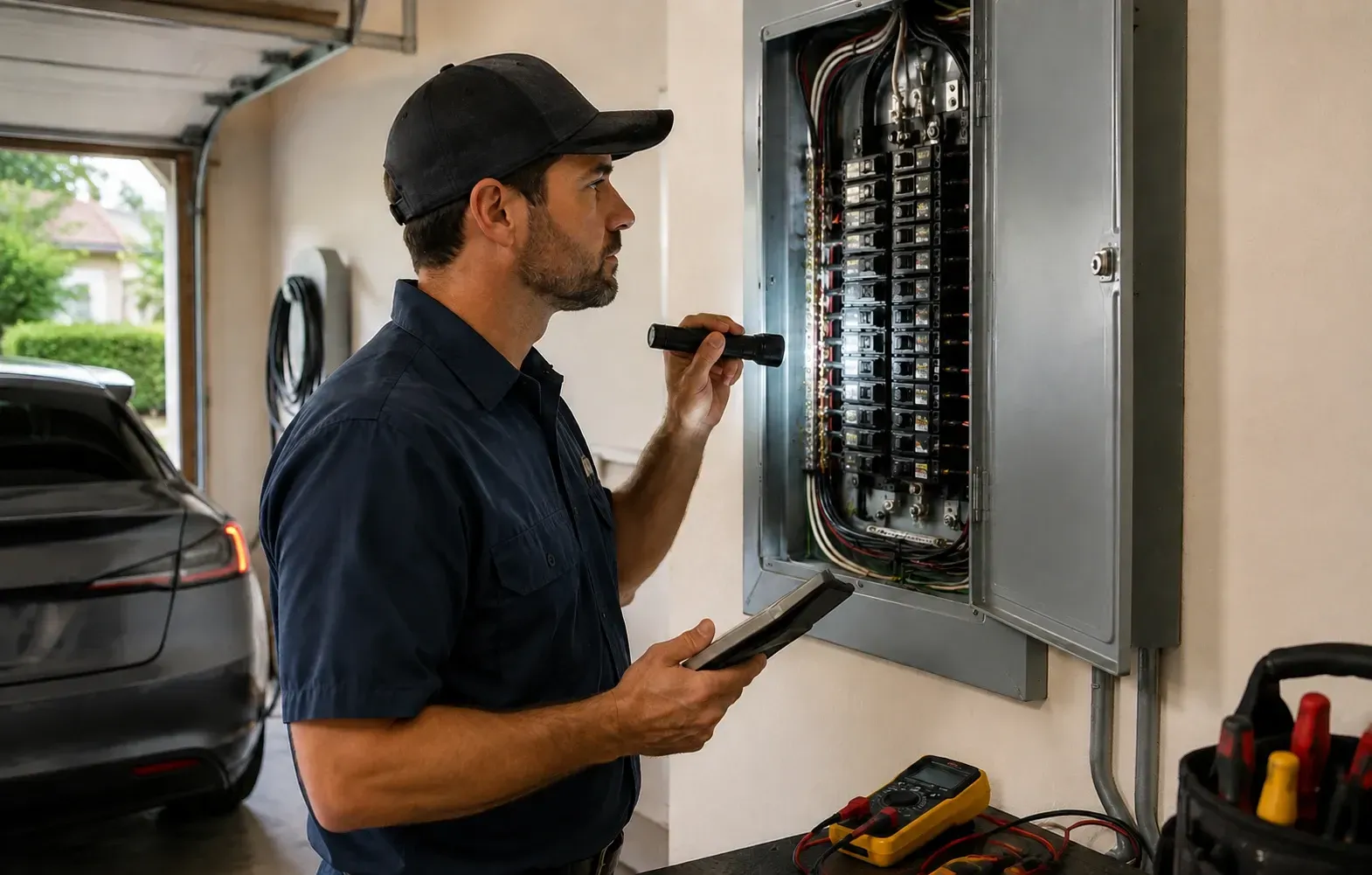
The amount of electrical work required can vary considerably from one home to another. The location of the electrical panel, distance to the charger, circuit route, available electrical capacity, and existing electrical equipment can all affect the scope of the installation. The incentive should therefore be viewed as assistance toward eligible installation costs rather than an indication of what a particular project will cost.
Additional electrical work may also fall outside what the incentive covers. A project that requires changes beyond the eligible EV charging circuit should be evaluated based on the actual work needed, and homeowners should not assume that every electrical improvement associated with preparing a home for EV charging will qualify for reimbursement.
Because SMUD's installation incentive has specific eligibility and contractor requirements, homeowners interested in using it should review the current Charge@Home terms before scheduling the work. Understanding those requirements early allows the incentive to be considered during installation planning rather than attempting to qualify for it after the electrical work has already been completed.
Income-Eligible Customers May Have Additional Options
SMUD currently offers additional home EV charging assistance for qualifying income-eligible customers. Eligible single-family homeowners may receive a free Level 2 EV charger and EV circuit installation, providing a different form of assistance from the standard Charge@Home rebate program.
Eligibility is tied to SMUD's Energy Assistance Program Rate (EAPR). Customers who are already enrolled in EAPR or who qualify for the program may be eligible for the EV charger and installation offering. Other requirements apply, including owning or leasing a new or used plug-in electric vehicle and meeting the program's residential and account requirements.
The current program provides the electrical work needed to install a charger configured for 32-amp output on a 40-amp circuit. SMUD specifically states that electrical panel upgrades are not covered, so a home requiring additional panel work may have costs or electrical requirements outside the scope of this program.
The program also has installation limitations homeowners should understand before applying. SMUD states that its contractor will install the charger as close to the electrical panel as possible and that modifications or exceptions to that installation approach are not allowed. This makes the program particularly valuable for qualifying households, but it does not provide the same flexibility as independently designing a charger installation around a preferred location.
Income-eligible homeowners interested in the program should review SMUD's current eligibility requirements and application process before making separate charger or installation arrangements. Confirming eligibility first allows the homeowner to understand what SMUD may provide and whether the program is appropriate for the home's electrical system and planned charging needs.
Learn More About SMUD's EV Charger and Installation Program for Income-Eligible Customers
SMUD Offers an EV Electricity Rate Discount
SMUD also provides an electricity-rate benefit for qualifying plug-in electric vehicle owners. Under SMUD's current residential EV rate provisions, eligible customers can receive a 1.5-cent-per-kilowatt-hour discount on electricity used between midnight and 6 a.m.
An important feature of the discount is that it applies to all household electricity use during those hours, not only electricity used to charge the vehicle. For homeowners who can shift EV charging and other electricity use into the overnight period, the discount can provide an ongoing benefit beyond the one-time incentives associated with purchasing or installing charging equipment.
Eligibility is tied to the plug-in electric vehicle and the SMUD service address. SMUD currently requires the vehicle to be registered with the California DMV at the same address as the SMUD account, and customers need to provide the required vehicle information to receive the EV rate discount.
Home charging makes it relatively easy to take advantage of an overnight rate period because many vehicles remain parked for several hours while the household sleeps. Depending on the vehicle and charging equipment, charging can often be scheduled through the vehicle itself or through a charger with scheduling capabilities so that charging begins during the discounted period.
The EV rate discount should be considered separately from equipment and installation incentives. Charge@Home may help an eligible homeowner with some of the initial cost of establishing home charging, while the EV rate discount can affect the ongoing cost of electricity after the charger is in regular use.
Learn More About SMUD's Residential EV Rate Discount
Managed EV Charging May Return in a New Form
SMUD has used managed EV charging as another approach to coordinating residential electric vehicle charging. Rather than relying only on a fixed charging schedule, managed charging can adjust when an enrolled vehicle charges to help shift electricity use toward times when demand on the electrical grid is lower and more renewable energy may be available.
SMUD previously operated a Managed EV Charging pilot in partnership with participating vehicle manufacturers and charging-management technology providers. The program was designed to automatically schedule participating vehicles to charge at times that worked better for the electrical grid while still considering when the driver needed the vehicle.
That pilot is no longer accepting participation. SMUD states that the Managed EV Charging pilot closed on December 31, 2025, and that it is working on a new program. As of August 2026, SMUD directs customers to check back for additional information rather than offering enrollment in a current replacement program.
The concept is still worth understanding because managed charging differs from simply scheduling a vehicle to begin charging at the same time every night. A managed program can potentially coordinate charging based on broader grid conditions while still working toward having the vehicle ready when the driver needs it.
Homeowners interested in managed charging should therefore watch SMUD's current EV program information for a future offering rather than relying on details from the previous pilot. Any new program may have different vehicle compatibility, enrollment requirements, incentives, or charging controls from the program that ended in 2025.
Check SMUD for Managed EV Charging Updates
Check Incentive Requirements Before Buying or Installing Equipment
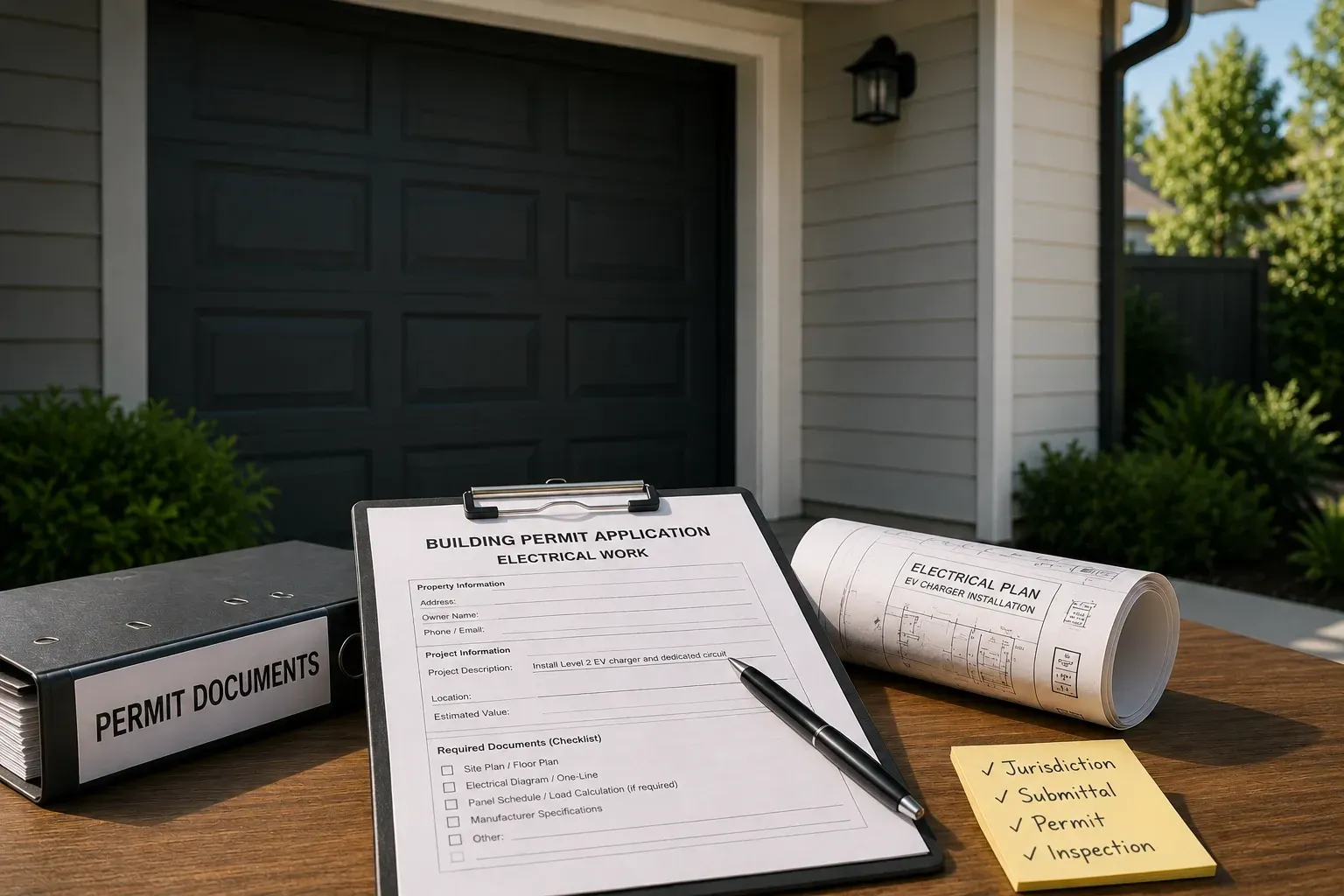
Homeowners interested in a SMUD EV charging incentive should review the program requirements before purchasing equipment or beginning electrical work. Finding an incentive after a charger has already been purchased or installed does not necessarily mean that the equipment or project will qualify for reimbursement.
Eligibility can depend on several factors, including the SMUD account, vehicle registration, charging equipment selected, electrical configuration, and the type of installation being performed. Some incentives also have specific requirements for how or through whom the electrical work is completed.
Equipment eligibility deserves particular attention. A Level 2 charger that works well with a particular vehicle and home electrical system may not necessarily meet the requirements of a SMUD incentive program. Homeowners considering Charge@Home should confirm that the specific equipment and planned charging configuration satisfy the current program requirements before making a purchase.
The installation should be planned with the incentive requirements in mind as well. For example, SMUD's current Charge@Home installation incentive requires eligible circuit installation through the SMUD Contractor Network. Program funding is also limited and applications are processed on a first-come, first-served basis, so the existence of an incentive should not be treated as a guarantee that reimbursement will be available.
A useful approach is to check the current program first, confirm customer and vehicle eligibility, verify qualifying equipment and installation requirements, and then make purchasing and installation decisions. Taking those steps in that order can help prevent a homeowner from completing a project only to discover afterward that an important program requirement was missed.
Verify Current SMUD Programs Before Starting Your Project
SMUD's EV charging programs, incentives, and rate options can change over time. Rebate amounts, available funding, eligible equipment, contractor requirements, income qualifications, electricity rates, and application procedures may be updated as programs evolve.
Before purchasing a charger or scheduling electrical work, homeowners should check SMUD's current program information to confirm what is available and which requirements apply to their project. This is especially important when an incentive depends on specific charging equipment, installation methods, participating contractors, or application requirements.
Programs can also be modified, replaced, or discontinued. SMUD's Managed EV Charging pilot is a good example: the pilot ended on December 31, 2025, while SMUD indicates that it is working on a new program. Homeowners interested in similar future opportunities should rely on SMUD's current information rather than assuming that the terms of a previous program still apply.
Treating incentives as part of the planning process allows homeowners to make decisions using the programs that are actually available when their project begins. Confirming current eligibility, equipment requirements, installation conditions, and program availability before spending money provides a much better foundation than relying on older rebate information found elsewhere online.
Conclusion
SMUD currently offers several programs that can help eligible customers with home EV charging. Depending on the homeowner and project, these may include Charge@Home incentives for qualifying charging equipment and electrical installation, additional assistance for eligible income-qualified customers, and an ongoing electricity-rate discount for qualifying plug-in EV owners.
Each program serves a different purpose and has its own eligibility and participation requirements. The charging equipment selected, vehicle and account information, electrical installation, contractor requirements, and timing of project decisions can all affect whether a homeowner qualifies for a particular benefit. Understanding those requirements before purchasing equipment or beginning electrical work can help homeowners incorporate available incentives into their charging plans.
Because utility programs, funding, rates, and equipment requirements can change, Sacramento homeowners served by SMUD should verify current information directly with the utility when they are ready to move forward. Starting with SMUD's current requirements provides the best way to understand which programs are available and how they may apply to a planned home EV charging installation.
How much is the SMUD Charge@Home rebate?
SMUD currently offers eligible customers Charge@Home rebates of up to $600 toward qualifying EV charging equipment and/or electrical circuit installation. The amount received depends on eligible expenses, program requirements, and available funding.
Does any Level 2 EV charger qualify for the SMUD rebate?
No. Charging equipment must meet SMUD's current eligibility requirements, and homeowners should verify that a specific charger and planned configuration qualify before purchasing equipment.
Can SMUD help pay for EV charger installation?
SMUD's current Charge@Home program may provide up to $500 toward eligible EV charging circuit installation performed through the SMUD Contractor Network. This incentive is subject to the program's requirements and overall rebate limits.
Does SMUD offer additional EV charging help for income-eligible customers?
Yes. Qualifying customers enrolled in or eligible for SMUD's Energy Assistance Program Rate (EAPR) may qualify for a Level 2 charger and EV circuit installation at no cost, subject to program requirements. Panel upgrades are not included in the current offering.
Does SMUD offer a discount for charging an EV overnight?
Qualifying plug-in EV owners can currently receive a 1.5¢ per kWh discount from midnight to 6 a.m. The discount applies to all household electricity used during those hours, not just electricity used to charge the EV.
Is SMUD's Managed EV Charging program still available?
SMUD's previous Managed EV Charging pilot ended on December 31, 2025 and is no longer open for participation. SMUD says it is working on a new program, so interested customers should check SMUD's current EV information for future updates.
Contact Us
Contact Us - Resources SMUD Incentives
Planning a home EV charger installation in Sacramento?
Understanding your charging needs, electrical system, charger location, and available incentive programs can help you plan the right approach for your home. Call to discuss your project and the installation considerations that may apply.