Do You Need an Electrical Panel Upgrade for an EV Charger?
How to Know if Your Home's Electrical System Can Support Level 2 Charging
Installing a Level 2 EV charger does not automatically mean your home's electrical panel needs to be upgraded. Many homes can support EV charging with their existing electrical system, while others may require additional electrical work before a charger can be installed.
The answer depends on more than the size or age of the electrical panel. Available electrical capacity, existing household loads, breaker space, the power requirements of the planned charger, and the condition of the electrical system all need to be considered when evaluating an installation.
A home with an available breaker position may not necessarily have enough electrical capacity for the desired charging load. At the same time, a home with limited available capacity does not always require a complete panel upgrade. Depending on the home and charging needs, other charging configurations or energy management solutions may be possible.
Understanding how these factors work together can help homeowners avoid assuming that a costly electrical upgrade is necessary before the system has been properly evaluated. The goal is to find a charging solution that safely meets the household's needs while working appropriately with the home's electrical system.
Start With Your Home's Available Electrical Capacity
The first step in determining whether an electrical panel upgrade is needed is understanding how much capacity the home's electrical system has available for an additional load. A Level 2 EV charger can represent a significant new electrical demand, but the impact depends on the charging configuration and the other electrical loads already being served by the home.
Available electrical capacity is not simply the difference between the rating of the electrical service and the breakers installed in the panel. A proper evaluation considers the home's existing electrical loads and whether the system can safely accommodate additional demand. Homes with electric heating, air conditioning, electric water heating, cooking appliances, pool equipment, or other significant loads may have very different capacity available for EV charging.
The EV charger's planned power level also matters. A charging configuration with a lower electrical demand may be easier for an existing system to accommodate than a higher-powered configuration. This is one reason the homeowner's daily driving and charging needs should be considered alongside the vehicle's capabilities and the home's electrical system.
In many cases, the goal is not to maximize charging power but to provide enough reliable charging for everyday driving. Evaluating the home's available capacity with that goal in mind provides a better basis for determining whether the existing electrical system can support the charger or whether additional electrical work should be considered.
Panel Size Alone Does Not Tell the Whole Story
The electrical panel's rating is an important part of evaluating an EV charger installation, but the number printed on the panel does not by itself determine whether the home can support Level 2 charging. Two homes with similarly rated electrical systems can have very different amounts of capacity available for an additional load.
Much of that difference comes from the electrical equipment already being served by the home. Heating and cooling systems, water heaters, cooking appliances, clothes dryers, pool equipment, and other significant loads all contribute to overall electrical demand. A home with several large electric loads may have less capacity available for EV charging than another home with the same electrical service rating.
The electrical system itself may also have changed over time. Previous electrical work, additions to the home, remodeled spaces, or changes in major appliances can alter what the system is being asked to support. Those changes may not be obvious from simply looking at the panel or its rating.
The planned EV charger adds another variable. A home that can accommodate one charging configuration may not have sufficient available capacity for another with greater power requirements. That makes the intended charging load just as relevant to the evaluation as the panel rating.
Panel size is therefore one piece of the picture rather than a simple yes-or-no test for EV charging. Existing household loads, the condition and configuration of the electrical system, and the requirements of the planned charger all help determine whether the current system is suitable or whether additional electrical work should be considered.
Available Breaker Space and Electrical Capacity Are Different
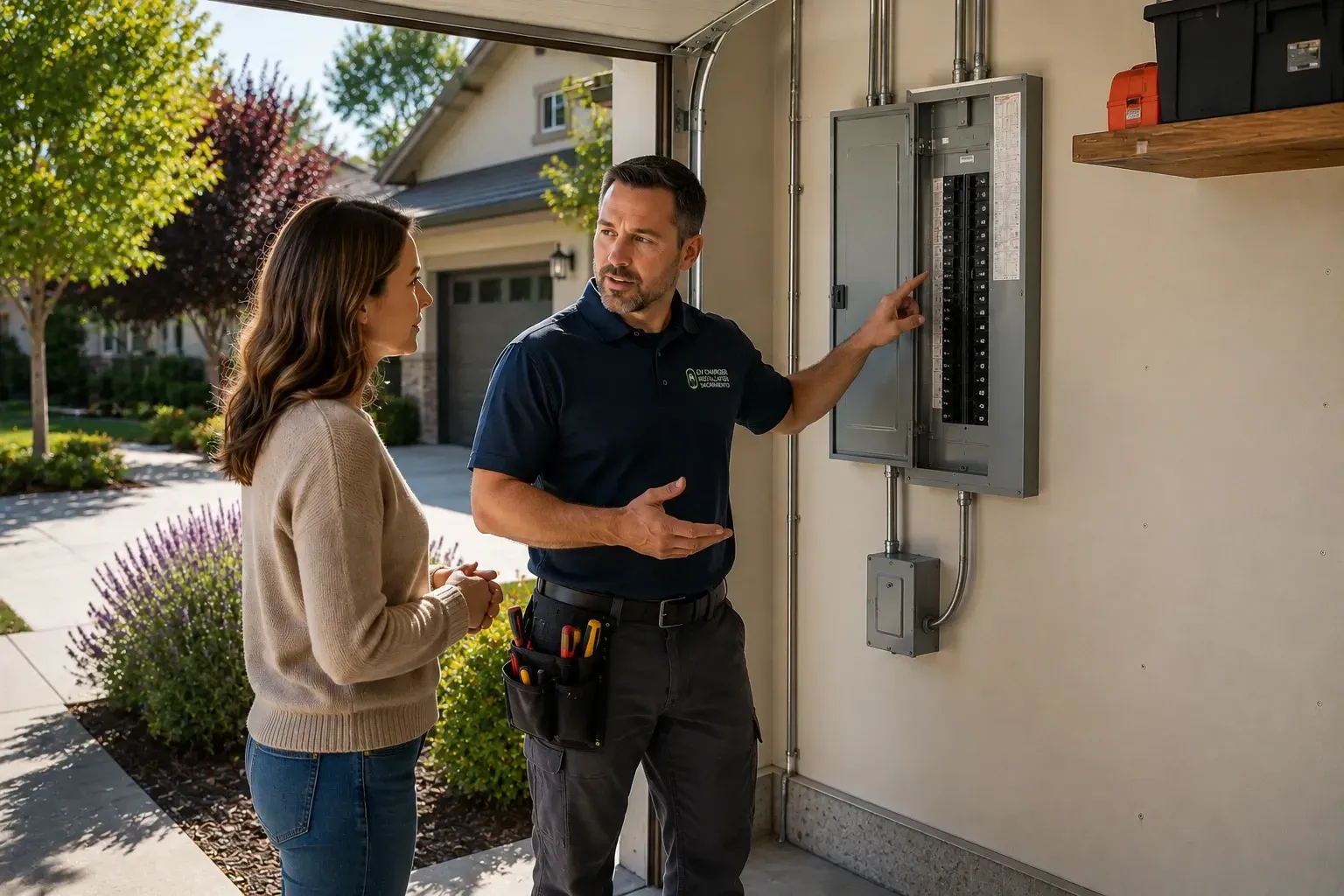
Opening an electrical panel and seeing an unused breaker position may seem like a good indication that there is room for an EV charger. However, physical space for a new circuit breaker and sufficient electrical capacity to support the charging load are two different things.
Breaker space refers to whether the panel has an appropriate physical location for the circuit protection required by the new charging circuit. Electrical capacity is a broader question: can the home's electrical system safely accommodate the additional EV charging load along with the electrical demands already being placed on it?
A panel can have available breaker positions while the electrical system has limited capacity for additional loads. The opposite can also occur. A home may have sufficient electrical capacity for EV charging while the existing panel configuration has limited space for the required circuit. A panel that looks "full" therefore does not automatically mean the home's electrical service needs to be upgraded.
Both conditions need to be considered when planning a Level 2 installation. An empty breaker position alone does not confirm that a charger can be added, and the absence of an obvious open position does not determine that a panel upgrade is necessary. What matters is how the planned charging circuit fits into the home's complete electrical system.
Your EV Charger's Power Requirements Matter
The electrical demand created by a Level 2 EV charger depends on the charging configuration selected. Level 2 charging can operate at different power levels, and a higher-powered configuration places a greater load on the home's electrical system. That additional demand can influence whether the existing system has enough available capacity for the installation.
More charging power does not necessarily mean more useful charging. The vehicle itself has a limit on how much AC charging power it can accept, so installing equipment capable of delivering more power than the vehicle can use will not make that vehicle charge faster.
Daily driving habits matter as well. A homeowner who drives a relatively modest number of miles each day and normally leaves the vehicle parked overnight may have many hours available to replenish the energy used during the day. That can make a lower-powered Level 2 configuration entirely practical.
This becomes particularly relevant when electrical capacity is limited. In some homes, reducing the planned charging load may allow Level 2 charging to work with the existing electrical system when a higher-powered configuration would require additional electrical work.
That does not mean charging power should always be reduced to avoid an upgrade. The appropriate configuration depends on the vehicle, driving patterns, available charging time, the home's electrical system, and any reasonable future charging needs. Those factors should be considered together rather than starting with an assumed charging rate.
For homeowners evaluating whether a panel upgrade is necessary, the charger's planned electrical demand is therefore an important part of the question. The objective is not necessarily to install the most powerful charger the home can accommodate, but to provide reliable charging that meets everyday needs without placing unnecessary demands on the electrical system.
Older Homes May Need Additional Evaluation
An older home does not automatically need an electrical panel upgrade to support an EV charger. The age of the house may provide some context, but what matters for the installation is the condition, capacity, and configuration of the electrical system serving the property today.
Those systems can change considerably during the life of a home. Electrical panels may have been replaced, circuits added, or other improvements completed by previous owners. An older house may therefore have an electrical system that is much newer than the structure itself.
At the same time, electrical demand may have grown as the home changed. Air conditioning, electric appliances, remodeled spaces, additions, pool equipment, solar equipment, and other loads may have been added over the years. The resulting electrical system can be quite different from what was originally installed.
Previous electrical work is another reason an older home may deserve a closer look. The condition of the panel and other equipment, earlier modifications, and the location of existing electrical components can all influence what is involved in adding a new charging circuit. Any issues that need attention should be identified as part of evaluating the installation rather than assumed simply because of the home's age.
For EV charging, the important question is not "How old is the house?" but "What electrical system does the house have now, and can it support the planned charging load?" Answering that question provides a much better basis for determining whether the existing system can be used or whether electrical improvements should be considered.
A Panel Upgrade Is Not Always the Only Option
If a home's electrical system does not have enough available capacity for the initially planned EV charging load, replacing the panel or increasing the home's electrical service may not always be the only solution. The reason for the limitation needs to be understood before deciding how to address it.
One possibility is to reconsider the planned charging power. As discussed earlier, a lower-powered Level 2 configuration may still provide more than enough charging for everyday use while placing less demand on the home's electrical system.
Energy or load management technology may provide another option in some installations. These systems can manage the power available for EV charging in relation to other electrical demands in the home, allowing the charging load to be controlled rather than simply added to the home's potential demand.
There may also be situations where more limited electrical changes can address the particular issue without requiring a complete panel or service upgrade. For example, the challenge may involve the panel configuration or another specific part of the installation rather than the home's overall electrical capacity.
None of these alternatives should be viewed as a universal way to avoid an electrical upgrade. The appropriate approach depends on what is limiting the proposed installation, the condition and configuration of the electrical system, the charging equipment, and what the homeowner actually needs from home charging.
That is why identifying the constraint comes before choosing the solution. If the existing system cannot support the installation as originally planned, the next question should be what needs to change and why—not automatically whether the entire electrical panel needs to be replaced.
When an Electrical Panel Upgrade May Make Sense
While an electrical panel upgrade is not automatically required for a Level 2 EV charger, there are situations where upgrading the electrical system may be the appropriate solution. If the existing system cannot safely accommodate the desired charging load and other suitable approaches do not meet the homeowner's needs, additional electrical capacity may need to be considered.
The EV charger may also reveal limitations that already exist independently of the charging project. The panel may have conditions that need attention, or the existing electrical system may no longer be well suited to the demands being placed on it. In those situations, the EV charger is not necessarily the reason for the upgrade—it may simply be what brings the issue to light.
A homeowner's broader plans can influence the decision as well. A second EV, additional electric appliances, or other significant future loads may make increased electrical capacity more useful than designing the system only around today's charger. When electrical improvements are already being considered, looking at those plans together can help avoid addressing each new load as a separate project.
A panel or service upgrade should ultimately solve an identified electrical need rather than be treated as a standard part of installing an EV charger. When the existing system is suitable, there is no reason to upgrade it simply because a charger is being added. When it is not, an appropriately planned upgrade can support both the charging installation and the home's broader electrical requirements.
Think Beyond Today's EV Charger
When evaluating an electrical system for EV charging, it can be helpful to consider how the home's electrical needs may change in the future. An installation that works well for today's vehicle should meet the homeowner's immediate needs, but other planned electrical changes may also influence decisions about the panel and available capacity.
A second electric vehicle is one obvious consideration. A household that expects to add another EV may eventually need to support additional charging demand, although that does not necessarily mean two vehicles must charge at maximum power at the same time.
New home construction also provides an opportunity to plan ahead. Even when the homeowner does not currently own an EV, considering the location of future charging equipment and providing appropriate electrical infrastructure during construction can make a later installation easier. Planning for a possible second charging location may also be worthwhile for households expecting to own more than one EV.
Other changes can increase a home's electrical needs as well. Heat-pump heating and cooling systems, heat-pump water heaters, induction cooking, electric appliances, solar and battery systems, and other equipment may become part of a homeowner's future plans.
These possibilities do not mean an electrical panel should be upgraded simply to prepare for every potential future load. However, if significant electrical work or new construction is already underway, understanding the homeowner's longer-term plans can help avoid making decisions based only on today's charging requirements.
Thinking beyond the immediate EV charger allows homeowners to consider the electrical system as part of the home's overall energy needs. The right approach balances what is needed today with reasonable plans for how the home and its electrical demands may change over time.
Conclusion
Installing a Level 2 EV charger does not automatically mean your home needs an electrical panel upgrade. The answer depends on the available electrical capacity, existing household loads, breaker space, condition of the electrical system, and the power requirements of the planned charging configuration.
When the existing system has sufficient capacity, an EV charger may be added without upgrading the panel. When capacity is limited, options such as a lower-powered charging configuration or energy management technology may be appropriate in some homes. In other situations, an electrical panel or service upgrade may provide the best solution for the homeowner's current and future electrical needs.
The important step is to evaluate the electrical system before assuming an upgrade is either necessary or unnecessary. Looking at the complete picture—including everyday charging needs and reasonable plans for future electrical loads—helps homeowners choose an approach that provides reliable EV charging while working appropriately with their home.
Does Every Level 2 EV Charger Require a Panel Upgrade?
No. Many homes can support Level 2 charging with their existing electrical system. Whether an upgrade is needed depends on available electrical capacity, existing loads, charger requirements, and the condition of the system.
Can a 100-Amp Electrical Panel Support an EV Charger?
Possibly. A 100-amp service does not automatically rule out Level 2 charging. Existing household loads, available capacity, charger power requirements, and the overall electrical system need to be evaluated together.
Does an Empty Breaker Space Mean I Have Enough Capacity?
No. An empty breaker position means there may be physical space for another circuit, but it does not confirm sufficient electrical capacity. Breaker space and available electrical capacity are separate considerations.
Can I Use a Lower-Powered Level 2 Charger Instead of Upgrading My Panel?
In some homes, yes. A lower-powered Level 2 charging configuration places less demand on the electrical system and may still provide enough charging for everyday driving. The appropriate solution depends on the home and charging needs.
Can Load Management Help Avoid an Electrical Panel Upgrade?
In some installations, energy or load management technology can control EV charging in relation to other electrical demands in the home. Whether it is appropriate depends on the electrical system, charger, and installation requirements.
Should I Upgrade My Panel if I Plan to Add a Second EV?
Not automatically. A second EV is worth considering when planning electrical capacity, but charging needs and timing can vary between households. Future charging requirements should be evaluated along with the home's other electrical demands.
Contact Us
Contact Us - Resources Panel Upgrade
Planning an EV charger installation but unsure whether your electrical panel can support it?
Your home's available electrical capacity, existing loads, charger requirements, and panel condition all help determine what electrical work may be needed. Call to discuss your project and the charging options that may work for your home.