Best Location for an EV Charger in Your Sacramento Garage
Planning a Charger Location That Works for Your Home and Vehicle
Choosing where to install an EV charger in the garage can have a lasting effect on how convenient home charging is to use. The electrical panel and circuit route are important considerations, but the best charger location also depends on where the vehicle is parked, the location of its charging port, cable reach, available wall space, and how people move through the garage.
A charger that is positioned well should allow the vehicle to be connected without routinely stretching the charging cable, creating unnecessary obstacles, or requiring an awkward parking position. At the same time, the location needs to work with the home's electrical system and provide a practical route for the new charging circuit.
Thinking about charger placement before electrical work begins allows homeowners to balance installation requirements with everyday convenience. This guide looks at the major factors Sacramento homeowners should consider when choosing a location for a Level 2 EV charger inside the garage.
Start With Where the Vehicle Normally Parks
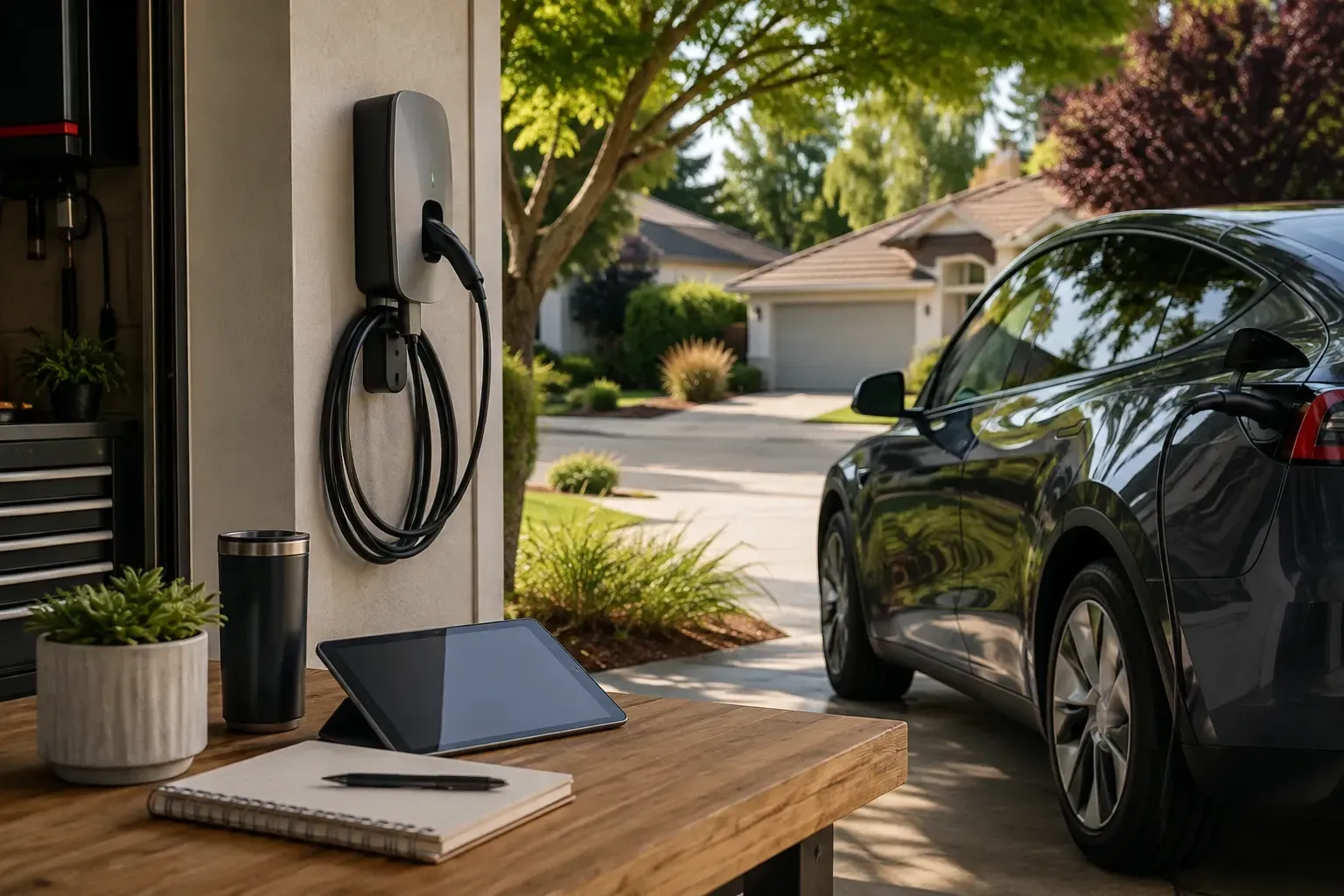
A practical EV charger location starts with understanding where the vehicle will normally be parked while charging. For some homeowners, that will be inside the garage. For others, the EV may routinely remain in the driveway even though the charging equipment is installed on a wall inside the garage.
Before choosing a location for the charger, consider which garage bay or driveway position the EV normally uses, how the vehicle is oriented, and whether it is typically pulled in or backed into the space. The goal is to plan around the household's actual parking habits rather than an ideal arrangement that may rarely occur.
Everyday parking habits matter because the charger should be convenient to use without requiring the driver to reposition the vehicle each time it needs to be charged. Garage storage, workbenches, interior doors, steps, appliances, or simply a lack of available parking space can all influence where the EV realistically spends the night.
It can be helpful to place the EV in its normal charging position and consider the path the charging cable would need to take from several possible charger locations. This simple exercise can reveal whether a proposed location would require stretching the cable, routing it around obstacles, crossing a frequently used area, or changing normal parking habits just to reach the vehicle.
Starting with the vehicle's actual parking position provides a practical reference point for the rest of the placement decision. From there, homeowners can consider the location of the charging port, available cable length, wall space, electrical requirements, and whether the charger needs to conveniently serve a vehicle parked inside or outside the garage.
Consider the Location of the Vehicle's Charging Port
EV charging ports are not located in the same place on every vehicle. Depending on the make and model, the charging port may be near the front or rear of the vehicle, on either side, or in another location that affects how the charging cable needs to reach the car.
The location becomes especially important when considering where the charger will be mounted. A charger positioned conveniently for a port near the driver's-side rear of one vehicle may be less convenient for a future EV with its charging port near the front or on the opposite side. How the vehicle is normally parked—pulled in or backed in—can change the relationship between the charger and charging port as well.
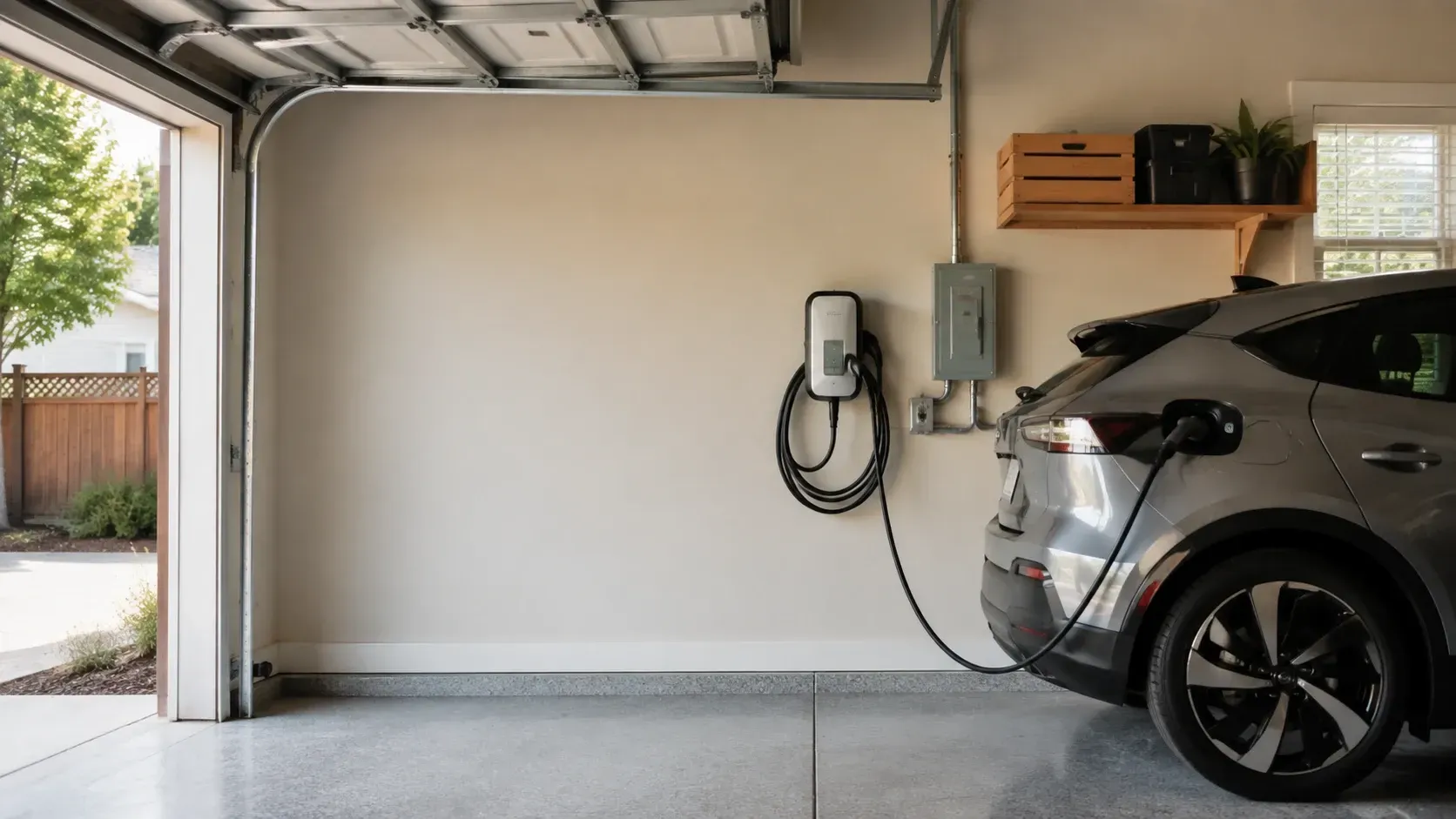
The goal does not necessarily need to be placing the charger as close as possible to the charging port. A slightly more central or flexible location may allow the cable to reach comfortably without being stretched across the vehicle, routed around obstacles, or placed where it interferes with normal movement through the garage.
This becomes particularly important when the EV normally charges in the driveway. The homeowner should consider where the vehicle will be positioned relative to the garage, which side of the vehicle contains the charging port, and whether the proposed charger location provides a practical cable path from inside the garage to the parked vehicle.
Homeowners should consider today's vehicle while also allowing reasonable flexibility for a different EV in the future. The objective is not to anticipate every possible charging-port location, but to avoid choosing a charger position that works well only for one very specific vehicle and parking orientation.
Make Sure the Charging Cable Can Reach Comfortably
The charging cable needs to comfortably reach the vehicle's charging port from its normal parking position. Before selecting a charger location, homeowners should consider the cable length provided with the specific charging equipment they plan to install rather than assuming that every Level 2 charger provides the same reach.
A cable that technically reaches the vehicle may still be inconvenient if it must be pulled tight or stretched diagonally across the garage every time the vehicle is charged. Providing some flexibility in the cable path makes it easier to connect the vehicle without placing unnecessary tension on the cable, connector, or charging equipment.
The cable route should also work when the vehicle is parked slightly differently from one day to the next. Parking position naturally varies, and a charger location that depends on placing the vehicle in exactly the same spot every time can quickly become frustrating. A comfortable amount of reach allows for those normal variations.
For a vehicle that normally charges in the driveway, cable reach needs to be evaluated from the charger location all the way to the vehicle's normal outdoor parking position. The homeowner should consider not only whether the connector reaches the charging port, but also where the cable will travel between the garage and vehicle and whether that route will be practical for regular use.
Thinking about cable reach before the charger is mounted can prevent a location that looks convenient on the wall from becoming inconvenient in everyday use. The best placement allows the charging cable to reach naturally while leaving enough flexibility for normal parking variations and comfortable connection and disconnection.
Keep the Charging Cable Out of Walking and Driving Paths
A convenient charger location should allow the charging cable to reach the vehicle without routinely creating an obstacle in the garage or driveway. The path the cable takes while the vehicle is charging is just as important as the location of the charger itself.
Garages often contain frequently used walking routes between vehicles, storage areas, interior doors, and the driveway. A charging cable stretched across one of these paths can become a trip hazard, particularly when someone is carrying groceries, moving equipment, or walking through a dimly lit garage.
The cable should also be positioned where vehicles do not routinely drive over it. Charger placement that requires the cable to cross an active parking or driving path can expose the cable and connector to unnecessary wear and make everyday charging less convenient.
Cable management should be considered when the vehicle is not charging as well. A practical charger location should provide a convenient way to store the cable and return the connector to its holder so that the equipment is not left lying on the floor or hanging where it interferes with vehicles, doors, or normal use of the garage.
For vehicles charging in the driveway, the entire cable route from the charger to the vehicle deserves particular attention. A location that provides adequate reach may still be a poor choice if the cable must routinely cross a sidewalk, doorway, garage entrance, or other heavily traveled area to reach the vehicle.
Consider the Electrical Panel and Circuit Route
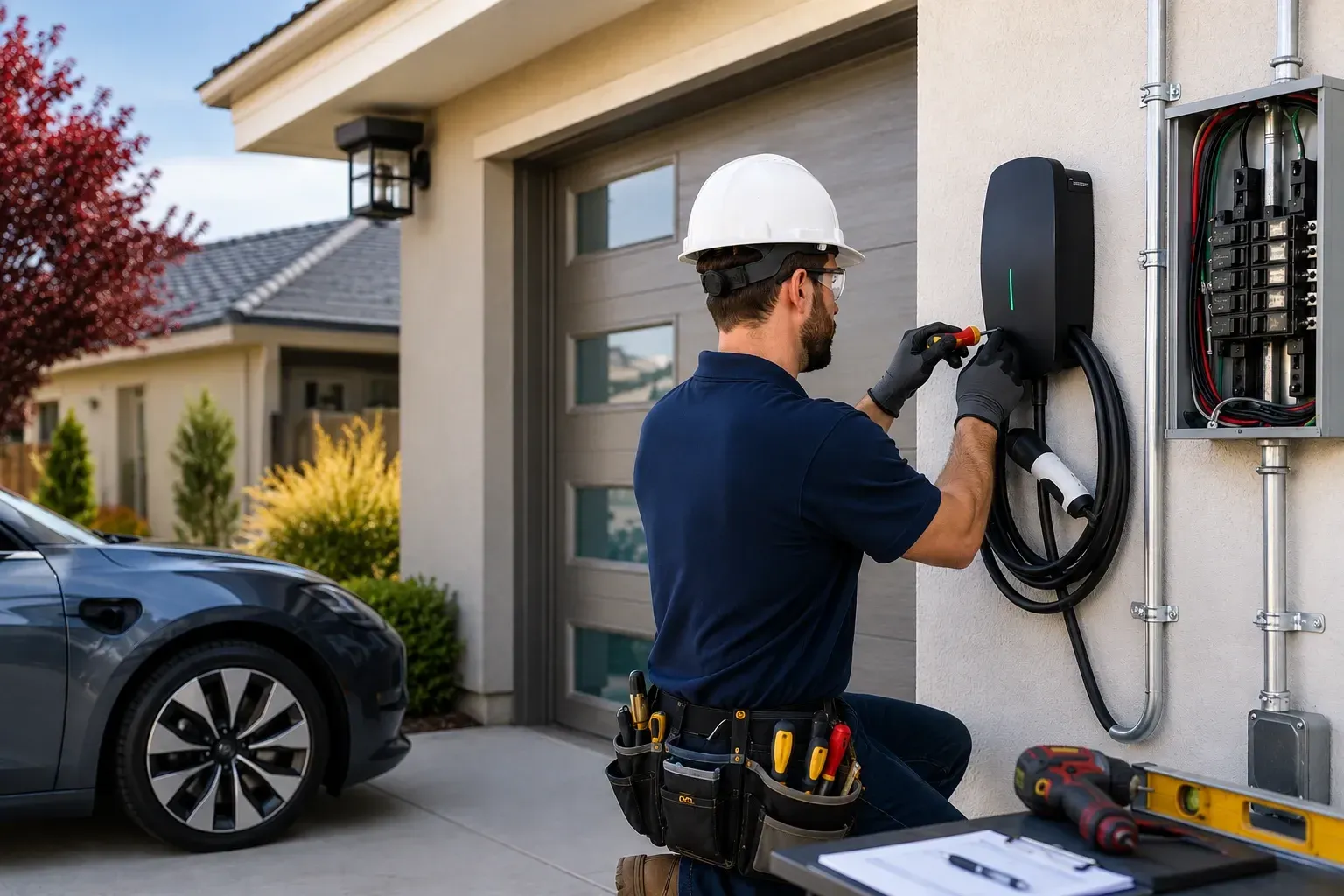
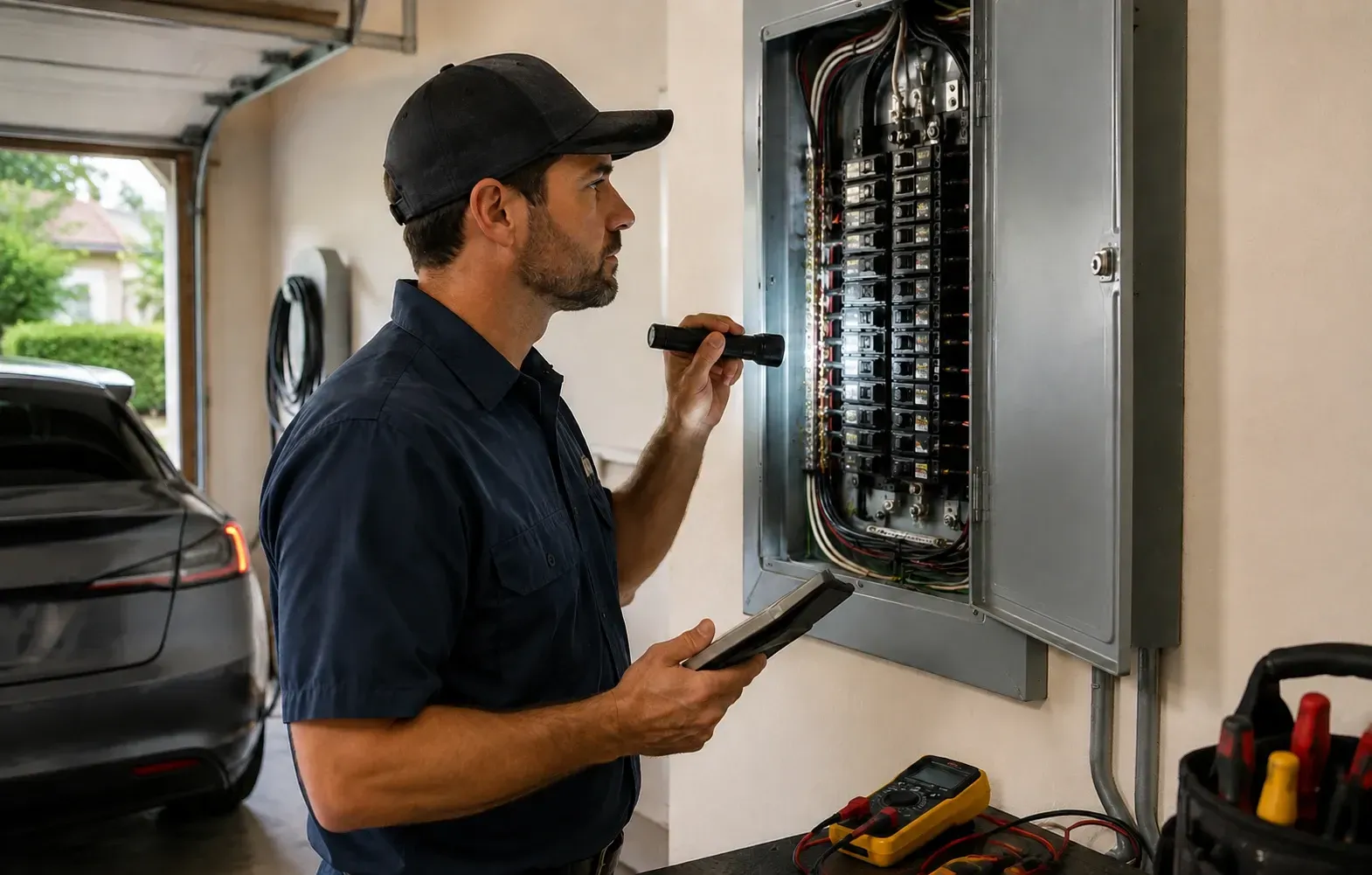
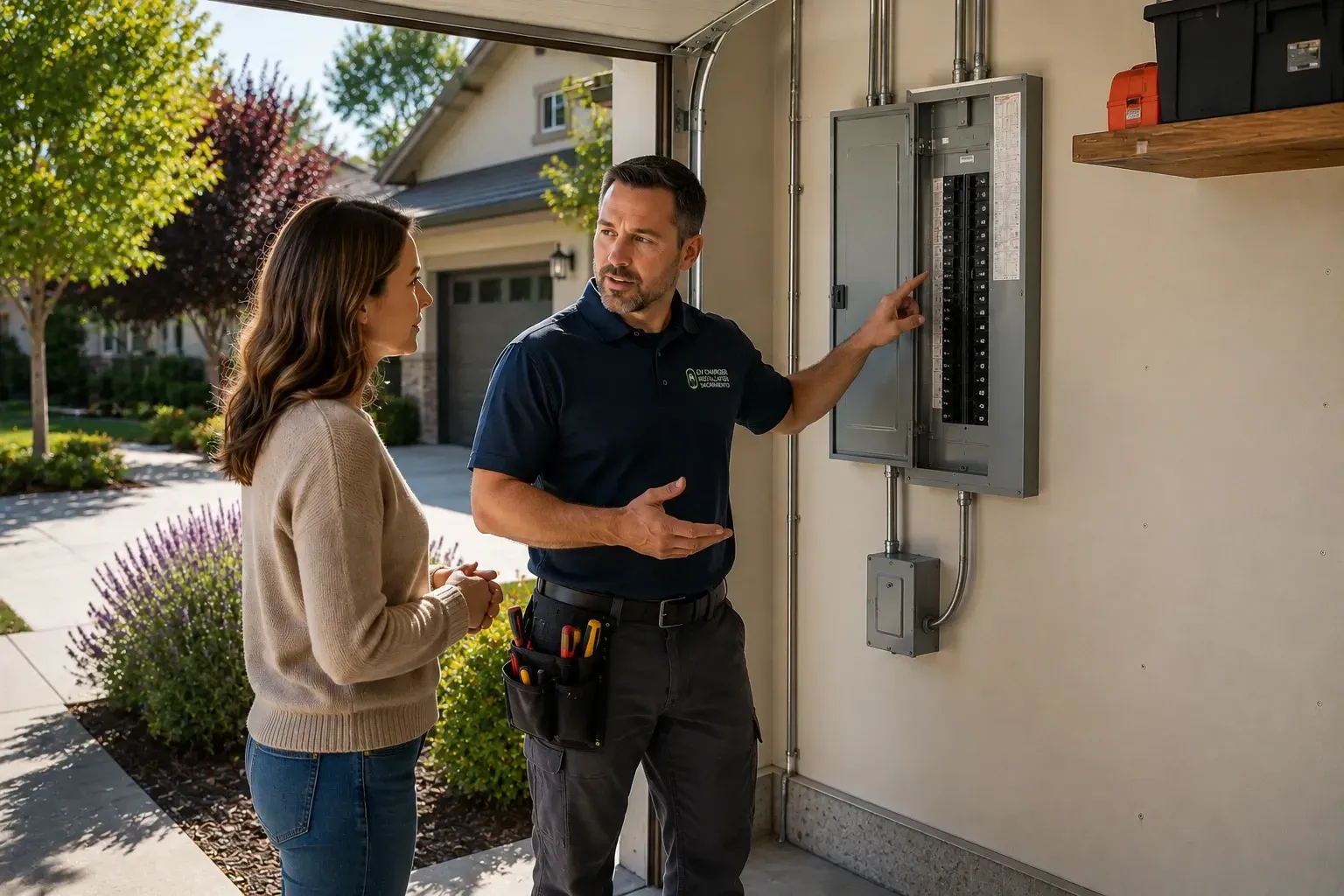
The location of the home's electrical panel is an important consideration when choosing where to install an EV charger. A Level 2 charger generally requires a dedicated electrical circuit, and the route from the panel to the charging equipment can affect the amount of wiring, conduit, and electrical work required for the installation.
A charger located relatively close to the electrical panel may allow for a shorter and more straightforward circuit route. A location farther away could require wiring to travel through or around finished walls, ceilings, storage areas, exterior surfaces, or other parts of the home before reaching the charger.
The shortest electrical route, however, does not automatically identify the best location for the charging equipment. Mounting the charger immediately beside the panel may simplify one part of the installation but provide poor cable reach, interfere with normal garage use, or make connecting the vehicle inconvenient.
In some garages, moving the charger farther from the panel may provide a much better location for everyday charging while still allowing a practical electrical route. The additional electrical work involved can then be considered alongside improvements in cable reach, accessibility, parking flexibility, and long-term usability.
The electrical panel and circuit route should therefore be evaluated as part of the overall placement decision rather than as the only determining factors. A well-planned location balances the requirements of supplying power to the charger with the convenience of using the charging equipment after the installation is complete.
Choose Wall Space That Allows Practical Charger Placement
Once a general area for the charger has been identified, the available wall space should be evaluated for practical everyday use. A garage wall that appears open may also need to accommodate storage cabinets, shelving, tools, workbenches, appliances, doors, or other items that could interfere with the charging equipment or cable.
The charger should be positioned where it remains accessible for connecting the vehicle, storing the cable, and using any controls or indicators on the equipment. Installing it in a cramped location or behind items that are frequently moved or stored can make a technically workable installation unnecessarily inconvenient.
Homeowners should also think about how the garage may be used in the future. An empty section of wall today could eventually become storage space, while existing shelving or cabinets may be reorganized. The charger does not need an oversized dedicated area, but giving the equipment reasonable space can help prevent it from competing with normal garage use.
Doors and other moving objects deserve attention as well. The charger, connector, and stored cable should be positioned where they will not routinely interfere with an opening door, vehicle movement, cabinets, or other equipment. The location should also allow the charging cable to be stored neatly when it is not connected to the vehicle.
Choosing wall space is therefore about more than finding somewhere the charger will physically fit. A good location keeps the charging equipment accessible, protects the surrounding space from unnecessary conflicts, and allows the garage to continue functioning for the other ways the household uses it.
Think About the Garage Door and Driveway
An EV charger installed inside the garage may sometimes need to serve a vehicle parked in the driveway. For some households, driveway charging may even be the normal arrangement because the garage is used for storage, a workshop, or other purposes that leave little or no room for a vehicle.
If the EV will regularly charge outside, charger placement should be planned around the vehicle's normal driveway position. The charging-port location, cable length, and path between the charger and vehicle all need to work together without requiring the vehicle to be repositioned each time it is connected.
The garage door itself also needs to be considered. A charging arrangement should not depend on routinely closing the garage door on a cable unless the charging equipment and garage configuration specifically provide an appropriate method for routing the cable without pinching, crushing, or otherwise interfering with it. Simply having enough cable length to reach the driveway does not make every route through the garage opening suitable.
The cable path outside the garage matters as well. A cable running to a driveway-parked EV should be positioned to avoid frequently used walking areas and locations where vehicles may drive over it. Depending on the garage and driveway layout, the location that works best for an indoor parking space may therefore be different from the location that works best when the vehicle normally charges outside.
Homeowners who expect to charge both inside the garage and in the driveway should consider both parking positions before selecting the charger location. A well-chosen position may provide enough flexibility to serve either location comfortably while keeping the charging cable manageable and the garage entrance usable.
Plan for a Future Vehicle Without Designing for Every Possibility
An EV charger may remain in the garage longer than the vehicle currently being charged. When choosing a location, it makes sense to consider whether the charger could still be convenient if the homeowner eventually replaces the EV with a different make or model.
Charging-port locations vary considerably between vehicles. A charger positioned specifically for the charging port on today's EV may become less convenient if the next vehicle has its port at the front, rear, or opposite side. Providing reasonable cable reach and flexibility can help the installation accommodate those differences.
That does not mean the charger needs to be positioned for every vehicle the homeowner might possibly own. Moving the equipment away from an otherwise practical location simply to accommodate an unlikely future scenario could make everyday charging less convenient for the vehicle being used now.
A household that expects to add a second EV should also recognize that this introduces additional considerations beyond simply choosing a more central location for the first charger. Electrical capacity, charging schedules, load management, parking arrangements, and whether one or two chargers are appropriate can all become part of planning for a multi-EV household.
The goal is to balance today's charging needs with reasonable flexibility for tomorrow. A charger location that works comfortably with the current vehicle while allowing some variation in parking position and charging-port location can provide useful adaptability without compromising the installation around possibilities that may never occur.
Balance Installation Requirements With Everyday Convenience
Choosing the best location for an EV charger usually involves balancing several considerations rather than optimizing for a single factor. Vehicle position, charging-port location, cable reach, walking and driving paths, available wall space, electrical-panel location, and the circuit route can all influence the final decision.
Some locations may make the electrical installation simpler but be less convenient for everyday charging. Others may provide excellent access to the vehicle but require a longer or more involved electrical route. Looking at these factors together allows homeowners to understand the tradeoffs before deciding where the charging equipment should be installed.
Everyday usability deserves particular attention because the charger may be connected and disconnected hundreds of times over its service life. A small inconvenience that seems unimportant during installation—such as routinely stretching the cable, walking around it, or parking the vehicle in an awkward position—can become much more noticeable with repeated use.
The best location should therefore work with the way the household actually uses the garage or driveway while still providing a practical electrical installation. It should allow the charging cable to comfortably reach the vehicle, provide convenient access to the equipment, minimize unnecessary obstacles, and accommodate reasonable changes in vehicles or parking arrangements.
Taking the time to compare several possible locations before electrical work begins can help homeowners find that balance. The goal is not simply to identify where an EV charger can be installed, but to choose a location where the charger will be convenient and practical to use for years to come.
Conclusion
Choosing the best location for a home EV charger involves more than finding an open section of garage wall. Where the vehicle normally parks, the location of its charging port, cable reach, walking and driving paths, available wall space, and the route from the electrical panel all contribute to how well the location will work.
The most convenient location for everyday charging may not be the closest location to the electrical panel, just as the location closest to today's charging port may not provide the best flexibility for a future vehicle. Considering several possible locations before installation begins allows homeowners to balance electrical requirements with the way the garage and driveway are actually used.
A well-planned charger location should make connecting the vehicle simple, keep the charging cable manageable, and provide reasonable flexibility as vehicles and parking habits change. Taking the time to think through placement before electrical work begins can help create a home charging setup that remains practical and convenient for years to come.
How close should an EV charger be to the vehicle?
The charger should be located where its cable can comfortably reach the vehicle's charging port without routinely being stretched tight. Allowing some extra reach also provides flexibility when the vehicle is parked slightly differently from day to day.
Does an EV charger need to be installed near the electrical panel?
Not necessarily. Installing closer to the electrical panel may simplify the circuit route, but the shortest electrical route does not automatically provide the most convenient charger location. Cable reach, parking position, accessibility, and everyday use should also be considered.
Can an EV charger inside the garage charge a car in the driveway?
It may be possible if the charging cable can safely and comfortably reach the vehicle's normal driveway position. The cable route, garage opening, walking areas, and locations where vehicles travel should all be considered when planning for regular driveway charging.
Can I close the garage door over an EV charging cable?
A charging arrangement should not depend on a standard garage door routinely closing on and pinching the cable. If charging outside from equipment inside the garage, the cable should have an appropriate route that avoids crushing, pinching, or otherwise interfering with it.
Should I locate my EV charger for my current vehicle or a future EV?
The current vehicle should be the primary consideration, but allowing reasonable flexibility can make the charger easier to use with a future EV that has its charging port in a different location. There is no need to compromise a practical installation today to accommodate every possible future vehicle.
Where is the best place to install an EV charger in a garage?
There is no single location that is best for every garage. A good location balances normal parking position, charging-port location, cable reach, safe cable routing, available wall space, electrical-panel location, and the circuit route.
Contact Us
Contact Us - Resources - Garage
Planning a home EV charger installation in Sacramento?
Choosing the right location can make charging more convenient while accounting for your vehicle, garage or driveway layout, cable reach, and electrical requirements. Call to discuss your project and the charger placement options that may work for your home.