EV Charger Installation Sacramento
Level 2 Home EV Charging in Sacramento
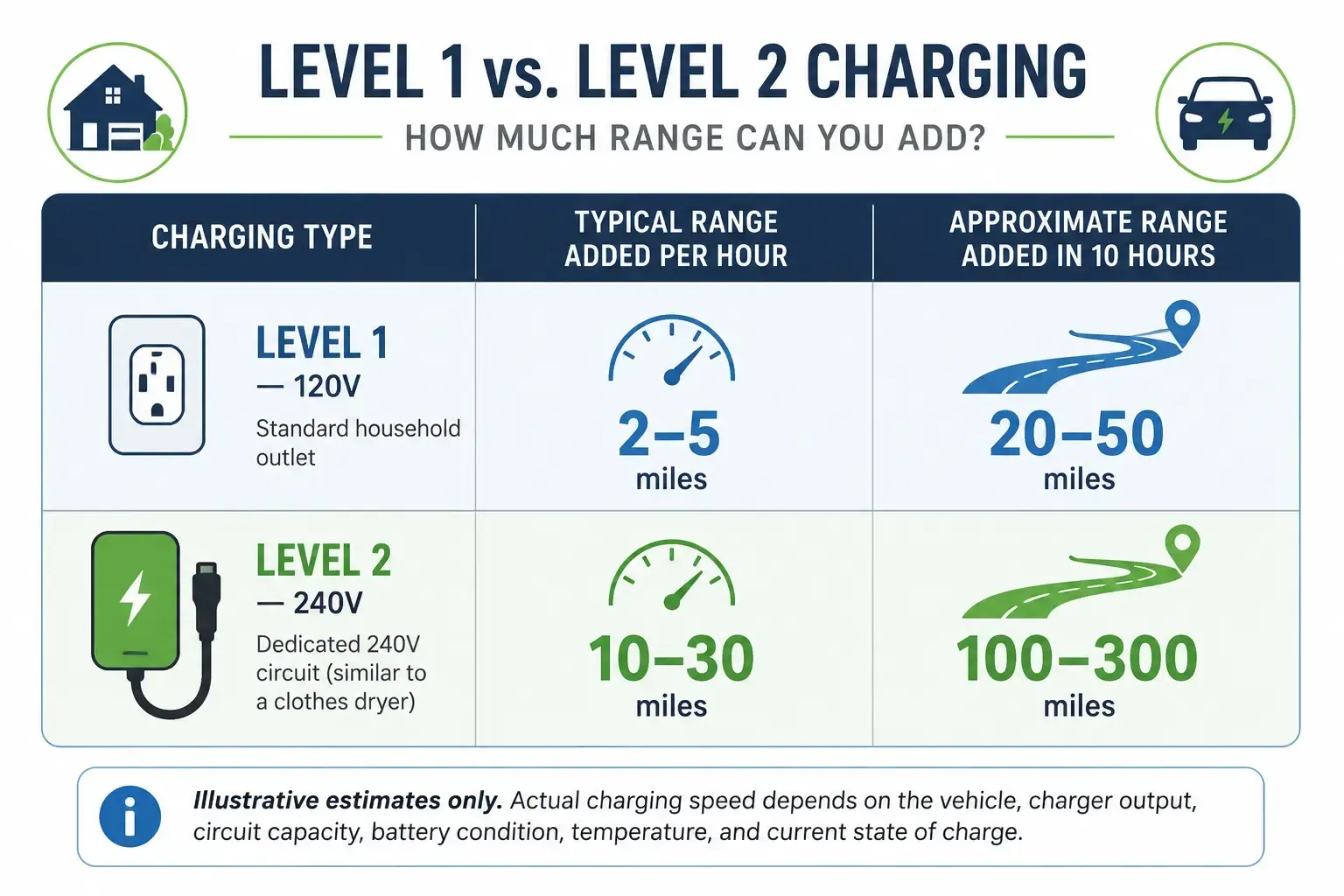
Level 2 charging uses a dedicated 240-volt circuit to replenish an electric vehicle substantially faster than Level 1 charging. The appropriate installation is not necessarily the highest-powered charger available. It should be matched to your vehicle, daily driving, parking location and the available capacity of your home’s electrical system.
What Is Level 2 EV Charging?
Level 2 charging equipment connects an EV to a dedicated 240-volt circuit. Because it can deliver considerably more power than a standard 120-volt outlet, it is the most common home-charging choice for drivers who want to recover their daily mileage comfortably while the vehicle is parked overnight.
The actual charging rate depends on several components working together: the circuit capacity, the charging equipment’s output setting and the maximum AC charging rate accepted by the vehicle. Charging speed follows the lowest limit in that chain.
When Does Level 2 Make Sense?
Level 2 charging may be appropriate when:
- The vehicle is driven substantial distances most days
- Overnight Level 1 charging cannot consistently replace the energy used
- The EV has a large battery
- The household has more than one electric vehicle
- Driving schedules are irregular or include frequent back-to-back trips
- Smart scheduling or energy-management features would be useful
- The homeowner wants a permanently installed charging location
Drivers with modest daily mileage may not need the maximum available charging rate. A properly sized installation can provide the needed overnight range without adding unnecessary electrical demand or project expense.
Choosing the Right Charging Capacity
A charger should be selected only after the vehicle and home have been evaluated. Installing equipment capable of delivering more power than the vehicle can accept will not make that vehicle charge faster. Likewise, a high-output charger may require electrical capacity that the home does not currently have available.
The evaluation should consider:
- The vehicle’s onboard AC charging limit
- Current and anticipated daily driving
- The charger’s adjustable output settings
- Electrical service and panel capacity
- Other major household electrical loads
- The distance between the panel and charging location
- The possibility of adding another EV
- Whether load management could help avoid an unnecessary panel upgrade
Hardwired Charger or 240-Volt Receptacle?
Some Level 2 chargers are connected directly to a dedicated circuit, while others plug into an approved 240-volt receptacle. Each approach has installation, equipment and code considerations.
A hardwired charger creates a permanent connection and may be preferred for higher-output equipment or outdoor locations. A receptacle-based installation can provide equipment flexibility, but the receptacle, enclosure, circuit protection and charging plug must all be appropriate for the location and sustained electrical load.
The best approach depends on the charger manufacturer’s instructions, the installation environment and applicable electrical requirements—not simply personal preference.
The Level 2 Installation Process
- Vehicle and charging-needs review
Identify the vehicle’s charging capability, normal daily mileage, overnight parking time and any plans for a second EV. - Electrical assessment
Evaluate the service panel, available capacity, existing household loads and possible circuit route. - Charger and location planning
Select an appropriate charger output and a mounting location that provides convenient parking, safe cable routing and protection from damage or weather. - Permit preparation
Determine the applicable jurisdiction and prepare the required application, plans, load calculation and equipment information. - Professional installation
Install the dedicated circuit, required protection, conduit or wiring and charging equipment according to the approved design and manufacturer instructions. - Inspection, testing and handover
Complete required inspections, test the charger and review its settings, cable storage and normal operation.
Sacramento Permitting Requirements
For a home within the City of Sacramento, the current residential EV charging checklist identifies a dedicated 240-volt circuit for Level 2 equipment. The permit submission includes an application, site plan, one-line electrical diagram, residential load calculation and applicable equipment documentation. Requirements in Sacramento County and surrounding cities may differ.
The current requirements are documented in the City of Sacramento’s 2026 residential EVSE submission checklist.
Smart Scheduling and SMUD Rates
Many Level 2 chargers and electric vehicles allow charging to be scheduled for selected hours. For customers of the Sacramento Municipal Utility District (SMUD), charging schedules can be coordinated with the utility’s Time-of-Day rate periods.
SMUD’s 2026 residential rate schedule identifies weekday peak hours from 5 p.m. to 8 p.m. and provides an additional electric-vehicle-owner discount from midnight to 6 a.m. Because rates and eligibility can change, homeowners should verify the current program before relying on it for a long-term cost estimate.
The current schedule is available in SMUD’s 2026 Time-of-Day rate chart
Safety and Professional Installation
Level 2 charging creates a substantial continuous electrical load. Circuit sizing, conductor selection, overcurrent protection, equipment configuration, grounding, mounting and cable placement all need to work together.
A qualified electrical professional can determine whether the proposed installation is appropriate for the home and whether load management, circuit adjustments or electrical-service improvements should be considered.
Ready for Faster Charging at Home?
A properly planned Level 2 installation can provide faster, more convenient home charging. We can help you consider charger selection, electrical capacity, installation location, permitting, and available incentives.