EV Charger Installation Sacramento
Will My Electrical Panel Support an EV Charger?
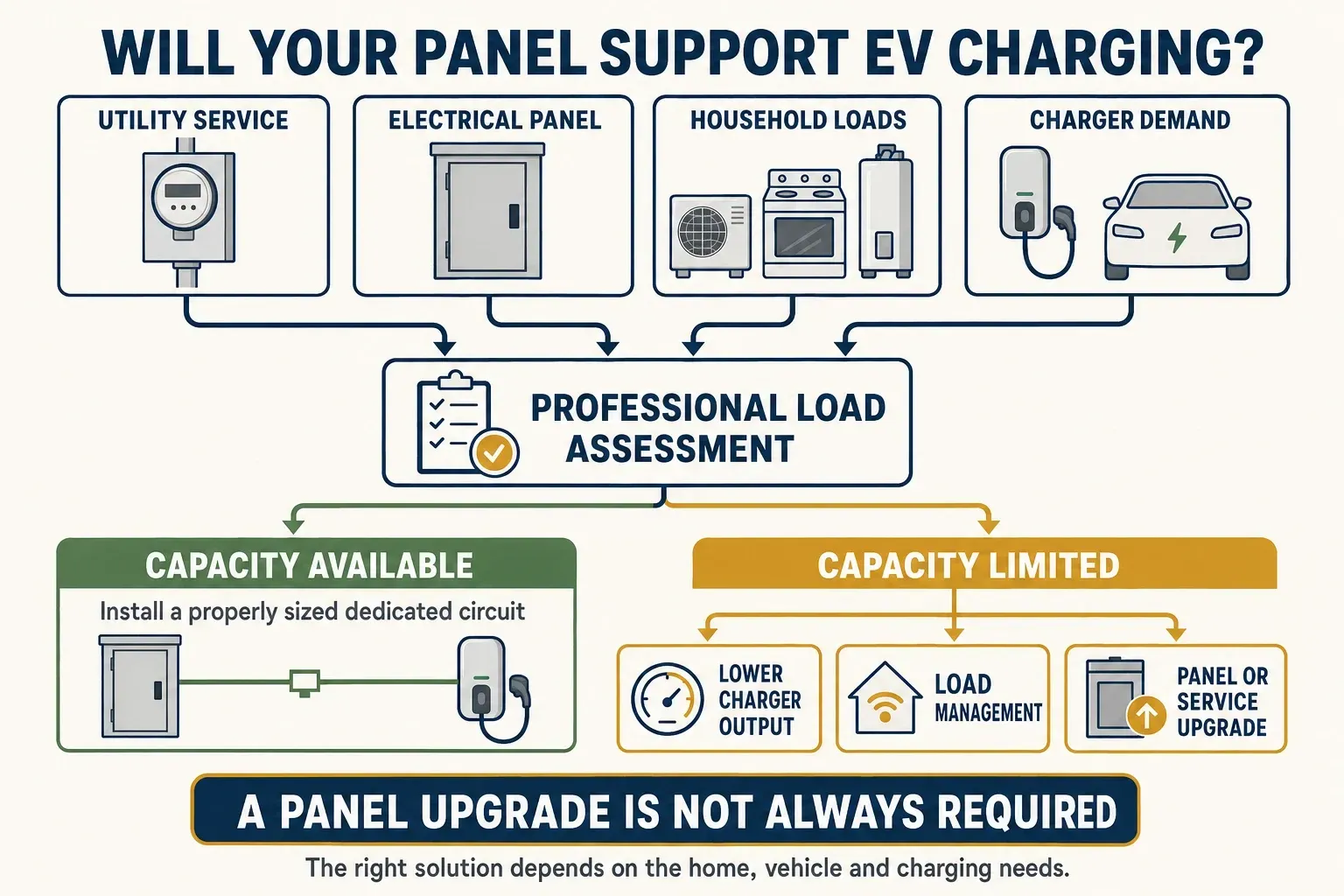
Many Sacramento-area homes can support EV charging without replacing the electrical panel. The answer depends on more than whether the panel is rated for 100 or 200 amps. Existing household demand, available breaker space, charger output and the condition of the electrical system all need to be evaluated together.
A professional load calculation can determine how much capacity is available and identify an appropriate charging solution for the home.
Panel Rating Is Only Part of the Answer
The main electrical panel may be labeled 100, 125, 150 or 200 amps, but that number does not show how much capacity is currently available.
A 200-amp panel can still be heavily loaded by air conditioning, electric heating, water heating, cooking appliances, a pool or spa and other equipment. Conversely, some homes with 100-amp service may be able to support Level 1 charging or a lower-output Level 2 charger.
The complete electrical load and the charging needs of the household should be considered before deciding whether an upgrade is necessary.
What an Electrical Load Calculation Evaluates
An electrical load calculation estimates the demand placed on the home’s electrical service by its existing appliances and equipment. The proposed EV charging circuit is then considered as an additional load.
The evaluation may include:
- The rating of the main electrical service and panel
- Heating and air-conditioning equipment
- Electric water heating and cooking appliances
- Clothes dryers, pools, spas and other substantial electrical loads
- Existing or planned solar, battery storage or home-electrification projects
- The proposed charger output and circuit size
For a Level 2 installation within the City of Sacramento, the permit submission checklist calls for an electrical load calculation along with a site plan, single-line diagram and equipment information.
Breaker Space and Electrical Capacity Are Different
An open space in the panel does not necessarily mean the electrical service has enough capacity for an EV charger. It only means there may be physical room for another breaker.
The opposite can also be true. A panel may have sufficient electrical capacity but lack the physical space needed for another circuit. Depending on the panel and the existing installation, an electrician may be able to recommend a code-compliant solution without replacing the entire service.
Both physical breaker space and available electrical capacity must be evaluated.
Charger Output Affects the Required Capacity
Level 2 chargers are available at several output levels. Higher-output equipment can charge a compatible vehicle faster, but it also places a larger demand on the electrical system.
The highest available charging output is not always necessary. Daily driving distance, the vehicle’s charging capability and the number of hours available for overnight charging should help determine an appropriate charger size.
Sacramento Municipal Utility District (SMUD) generally recommends a 32-amp charger operating on a 40-amp circuit for many residential Level 2 applications. The appropriate output for a particular home must still be confirmed through an electrical evaluation.
Options When Available Capacity Is Limited
Limited capacity does not automatically mean the electrical panel must be replaced. Depending on the home, vehicle and charging habits, possible approaches may include:
- Installing a lower-output Level 2 charger
- Using Level 1 charging when it provides enough daily range
- Selecting a charger with adjustable output
- Installing an approved energy-management device
- Using an approved circuit-sharing device in an appropriate application
- Upgrading the electrical panel or utility service when other options are unsuitable
An energy-management device monitors household electrical demand and temporarily reduces or pauses EV charging when the home approaches a defined capacity limit. A circuit-sharing device can allow certain compatible loads to use the same circuit at different times.
These systems must be properly selected and installed. They are not substitutes for an electrical evaluation or required permitting.
When a Panel or Service Upgrade May Be Recommended
An upgrade may be appropriate when the existing equipment is undersized, obsolete, damaged or unable to support the proposed charging load safely. It may also make sense when the homeowner is planning additional electrical projects such as a heat pump, electric water heater, induction range, second EV charger or battery system.
Replacing an electrical panel and increasing the utility service are related but distinct projects. Some panel replacements retain the existing service capacity, while a service upgrade may require coordination with SMUD and additional permitting.
Preparing for a Panel-Capacity Evaluation
The following information can help with the initial evaluation:
- A clear photograph of the main electrical panel and its labels
- The panel’s main-breaker rating, when visible
- The year and approximate size of the home
- A list of major electric appliances
- The EV make and model
- The charger being considered
- Typical daily driving distance
- The preferred charger location
- Any planned solar, battery or home-electrification projects
Do not remove the panel cover or touch internal electrical components to gather this information.
Start With the Charging Need
The goal is not necessarily to install the largest charger the electrical system can accommodate. It is to select a safe charging arrangement that provides enough energy for the household’s actual driving needs.
A load evaluation can clarify whether the existing system is sufficient, whether a managed or lower-output charging solution would be appropriate, or whether an electrical upgrade should be considered.
Contact Us
Contact Us - sacramento-electrical-panel
Not Sure Whether Your Panel Has Enough Capacity?
An electrical-capacity assessment can determine whether your existing panel can support the proposed charger or whether load management, circuit changes, or an upgrade should be considered.